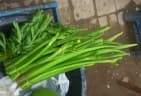
Limnocharis flava
Limnocharis flava
Safety & Hazards
None known
Cultivation Details
Grows best in shallow, neutral to slightly acidic water[1]. If allowed to grow unchecked, the plant may become a very invasive environmental weed of streams and wetlands. It has become a serious weed in rice fields, irrigation canals and wetlands in South-East Asia[2]. Clumps of the weed provide a congenial breeding site for disease-vectors, including mosquitoes, which encourages the spread of diseases such as Japan fever and dengue fever[2]. Plants are reproduced mainly by seeds - these are dispersed via the production of fruitlets, which are buoyant and carried by water to new localities, dispersing seeds along the way[2]. Fruiting takes place throughout the year, with a single fruit producing about 1,000 seeds and a single plant producing about 1,000 fruits per year[2].
Propagation
Seed - seed must be kept damp or it loses viability[1]. Sow in a constantly damp medium at 20c, cover with silver sand and immerse in 1cm of water once the seedlings have germinated[1]. Division Cite as: Tropical Plants Database, Ken Fern. tropical.theferns.info. 2026-02-20. <tropical.theferns.info/viewtropical.php?id=Limnocharis+flava>
Pollinators
Data unavailable
References
- [1]The New RHS Dictionary of Gardening. 1992. — Huxley. A. · MacMillan Press · 1992 · ISBN 0-333-47494-5 ↩︎Excellent and very comprehensive, though it contains a number of silly mistakes. Readable yet also very detailed.
- [2]Global Invasive Species Database — http://www.issg.org/database/welcome/ ↩︎Very detailed information on almost 400 species (with more being added) of plants that have become weeds in areas outside their native range.
- [3]Flora of Guatemala — Standley P.C. & J. A. Steyermark · 1946 - 1976 · http://www.archive.org/ ↩︎A superb reference, though somewhat dated. Gives lots of plant uses as well as information on plant habit and habitat. The entire flora (13 volumes) can now be downloaded from http://www.archive.org/
- [4]Mansfeld's Database of Agricultural and Horticultural Plants — http://mansfeld.ipk-gatersleben.de/pls/htmldb_pgrc/f?p=185:3:4292127278597336 ↩︎Terse details of a huge range of useful plants.
- [5]Cornucopia II — Facciola. S. · Kampong Publications, California. · 1998 · ISBN 0-9628087-2-5 ↩︎The second edition of an excellent guide to the edible uses of plants, though it does not give any details of cultivation etc.