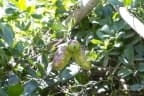
Lardizabala biternata
Lardizabala biternata
Safety & Hazards
None known
Cultivation Details
Lardizabala biternata is native to the warm temperate zone of Chile, where it is found at elevations up to 1,000 metres. The climate can be moist to semi-arid; in the moister areas the rainfall is spread throughout the year whilst in the drier regions it can range from 400 - 800mm per annum, concentrated in the winter with dry spell of up to 5 months. The plant is not very cold-hardy, being able to tolerate short-lived temperatures down to around -5 to -10°c when fully dormant[1, 2]. Prefers a well-drained humus-rich sandy loam in a shady protected position[1]. It succeeds in full sun or moderate shade[3, 4, 2], though in cooler regions it requires the protection of a sunny wall[5]. A very ornamental plant[6]. The young growth in spring can be damaged by late frosts. In cooler temperate zones the fruits are only formed after a long hot summer[7, 4]. Plants climb by means of twining[5], they do not really need pruning[4]. The flowers can be monoecious or dioecious. Male and female flowers are carried on the same plants[3].
Propagation
Seed - sow spring in a greenhouse[1]. Prick out the seedlings into individual pots when they are large enough to handle and grow them on in the greenhouse for at least their first winter. Plant out in early summer and, if possible, give the plants some protection for their first winter outdoors. Cuttings of half-ripe wood, 5 - 10cm long with a heel, early summer/July in a frame[8]. The cuttings should be put in individual pots[8]. A good percentage[8]. Stem cuttings in spring and autumn[1]. Cite as: Temperate Plants Database, Ken Fern. temperate.theferns.info. 2026-02-21. <temperate.theferns.info/plant/Lardizabala+biternata>
Pollinators
Flies, Insects
References
- [1]The New RHS Dictionary of Gardening. 1992. — Huxley. A. · MacMillan Press · 1992 · ISBN 0-333-47494-5 ↩︎Excellent and very comprehensive, though it contains a number of silly mistakes. Readable yet also very detailed.
- [2]ChileFlora — http://www.chileflora.com/index.html ↩︎Not realy a flora, but a lovely site with lots of helpful information for the gardener and an abundance of excellent photos covering over 2,000 species of Chilean plants.
- [3]The RHS Gardener's Encyclopedia of Plants and Flowers — Brickell. C. · Dorling Kindersley Publishers Ltd. · 1990 · ISBN 0-86318-386-7 ↩︎Excellent range of photographs, some cultivation details but very little information on plant uses.
- [4]Gardening on Walls — Grey-Wilson. C. & Matthews. V. · Collins · 1983 · ISBN 0-00-219220-0 ↩︎A nice little book about plants for growing against walls and a small section on plants that can grow in walls.
- [5]Ornamental Shrubs, Climbers and Bamboos. — Thomas. G. S. · Murray · 1992 · ISBN 0-7195-5043-2 ↩︎Contains a wide range of plants with a brief description, mainly of their ornamental value but also usually of cultivation details and varieties.
- [6]RHS Dictionary of Plants plus Supplement. 1956 — F. Chittendon. · Oxford University Press · 1951 · ISBN - ↩︎Comprehensive listing of species and how to grow them. Somewhat outdated, it has been replaced in 1992 by a new dictionary (see [ 200 ]).
- [7]The Milder Garden. — Taylor. J. · Dent · 1990 ↩︎A good book on plants that you didn't know could be grown outdoors in Britain.
- [8]Propagation of Trees, Shrubs and Conifers. — Sheat. W. G. · MacMillan and Co · 1948 · ISBN - ↩︎A bit dated but a good book on propagation techniques with specific details for a wide range of plants.
- [9]Dictionary of Economic Plants. — Uphof. J. C. Th. · Weinheim · 1959 · ISBN - ↩︎An excellent and very comprehensive guide but it only gives very short descriptions of the uses without any details of how to utilize the plants. Not for the casual reader.
- [10]Cornucopia - A Source Book of Edible Plants. — Facciola. S. · Kampong Publications · 1990 · ISBN 0-9628087-0-9 ↩︎Excellent. Contains a very wide range of conventional and unconventional food plants (including tropical) and where they can be obtained (mainly N. American nurseries but also research institutes and a lot of other nurseries from around the world.
- [11]An Overview of Lardizabalaceae — Christenhusz M.J.M. · 2012 ↩︎
- [12]Flora of Chile. (in Spanish) — ? ↩︎Some information about the useful plants of Chile.
- [13]Shrubs. — Phillips. R. & Rix. M. · Pan Books · 1989 · ISBN 0-330-30258-2 ↩︎Excellent photographs and a terse description of 1,900 species and cultivars.
- [14]Sturtevant's Edible Plants of the World. — Hedrick. U. P. · Dover Publications · 1972 · ISBN 0-486-20459-6 ↩︎Lots of entries, quite a lot of information in most entries and references.
- [15]Growing Unusual Fruit. — Simmons. A. E. · David & Charles; Newton Abbot. · 1972 · ISBN 0-7153-5531-7 ↩︎A very readable book with information on about 100 species that can be grown in Britain (some in greenhouses) and details on how to grow and use them.
- [16]Trees and Shrubs Hardy in Great Britain. Vol 1 - 4 and Supplement. — Bean. W. · Murray · 1981 · ISBN - ↩︎A classic with a wealth of information on the plants, but poor on pictures.
- [17]A Dictionary of Plants Used by Man. — Usher. G. · Constable · 1974 · ISBN 0094579202 ↩︎Forget the sexist title, this is one of the best books on the subject. Lists a very extensive range of useful plants from around the world with very brief details of the uses. Not for the casual reader.
- [18]Useful Fiber Plants of the World — Dodge C.R. · USDA; Washington. · 1897 · http://www.biodiversitylibrary.org/ ↩︎A rather dated, but very comprehensive catalogue of fibre plants from around the world. The book can be downloaded from the Internet.