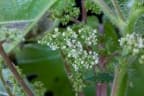
Laportea aestuans
Laportea aestuans
Safety & Hazards
The leaves contain irritant calcium oxalate crystals which can cause urticaria[1]. This is likely to be very similar to the common nettle (Urtica urens) where the crystals are most prevalent in older leaves, especially once the plant has started flowering - the young leaves are a very wholesome food to eat[PFAF]. Contact of the skin with the stinging hairs causes pain and blisters, but this effect is lost when plant parts are dried[2].
Cultivation Details
Usually found in partially shaded positions in the wild[2]. A very common plant in Africa, where it is often considered a weed[2]..
Propagation
Seed - Cite as: Tropical Plants Database, Ken Fern. tropical.theferns.info. 2026-02-20. <tropical.theferns.info/viewtropical.php?id=Laportea+aestuans>
Pollinators
Data unavailable
References
- [1]Medicinal Plants of the Guianas — DeFilipps, R. A.; Maina, S. L.; & Crepin, J. · Smithsonian Museum · http://botany.si.edu/bdg/medicinal/index.html ↩︎A down-loadable PDF document of a book in pre-publication awaiting illustration. An excellent, if rather terse, guide to the traditional medicinal uses of the plants of the region
- [2]Protabase - Plant Resources of Tropical Africa. — http://www.prota.org ↩︎An excellent on-line database with detailed information on over 3,200 species of useful plants of Africa.
- [3]Traditional Vegetables in Benin — Achigan-Dako E. Et al · Darwin Initiative; International Foundation for Science · 2009 ↩︎Issued as a PDF on the Internet, it contains basic information on over 250 species of plants used for food in Benin.
- [PFAF]Plants for a Future — pfaf.org ↩︎