Cultivation Details
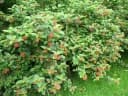
Grows in a wide variety of habitats in the tropical and subtropical zones[3]. It has succeeded in areas where the annual rainfall is around 750mm, though is then usually found along creek lines[3]. It is also found in tropical areas receiving 3,000mm of rainfall per year, provided that the soils are sufficiently well drained[3]. The plant is tolerant of high temperatures, but seldom occurs where temperatures frequently fall below 5°c[3]. Some varieties can withstand minor frosts, provided these are infrequent; prolonged freezing temperatures kill aerial woody branches and cause defoliation[3]. Succeeds in a wide range of soils[3], preferably well-drained[4]. Succeeds in poor soils[4]. Grows well in dry areas but also present in wetter habitats[5]. Grows best in open, unshaded situations, but tolerates moderate shade[5, 3]. Locally becoming an aggressive and pernicious weed[5, 6]. This thorny shrub forms dense understorey vegetation that crowds out and inhibits establishment of other species[5]. Allelopathic substances are produced by shoots and roots which inhibit germination and growth of other plants[5, 7]. The plant is apt to form dense thickets, spreads very quickly, with one plant producing as many as 12,000 seeds a year[7]. At some sites, infestations have been so persistent that they have completely stalled the regeneration of rainforest for three decades[3]. Plants respond well to cutting back, able to resprout even from severe and repeated cutting back[3]. The plants can tolerate all but the hottest forest fires, quickly resprouting from the base[5]. Stems and leaves emit an unpleasant aroma when crushed[8]. The scent is similar to blackcurrants[3].
Propagation
Seed - Cuttings Cite as: Tropical Plants Database, Ken Fern. tropical.theferns.info. 2026-02-20. <tropical.theferns.info/viewtropical.php?id=Lantana+camara>
Pollinators
Butterflies, Insects
References
- [1]Plant Resources of Southeast Asia — http://proseanet.org/ ↩︎Lots of information on the uses of the plants of SE Asia.
- [2]Poisonous Plants of North Carolina — http://www.ces.ncsu.edu/depts/hort/consumer/poison/poison.htm ↩︎An excellent concise but comprehensive guide to toxic plants that grow in N. Carolina. It lists even those plants that are of very low toxicity, including several well-known food plants such as carrots and potatoes.
- [3]Global Invasive Species Database — http://www.issg.org/database/welcome/ ↩︎Very detailed information on almost 400 species (with more being added) of plants that have become weeds in areas outside their native range.
- [4]KemperCentreForHomeGardeningPlantFinder — Missouri Botanical Garden · http://www.mobot.org/gardeninghelp/plantfinder/ ↩︎Basic cultivation details, plant uses, habitat etc for several thousand species of plants, mainly from the temperate zone.
- [5]Pacific Island Ecosystems at Risk — http://www.hear.org/pier/scientificnames/index.html ↩︎A very good website detailing weed species that have been introduced into the Pacific Islands.
- [6]Mansfeld's Database of Agricultural and Horticultural Plants — http://mansfeld.ipk-gatersleben.de/pls/htmldb_pgrc/f?p=185:3:4292127278597336 ↩︎Terse details of a huge range of useful plants.
- [7]Philippine Medicinal Plants — http://www.stuartxchange.org/CompleteList.html ↩︎A lovely site, giving brief details on the medicinal uses of several hundred (over 400 at the last count) plants in the Philippines, plus a picture of each plant.
- [8]Flowers of India — http://www.flowersofindia.net/ ↩︎A wed site of native Indian plants, plus cultivated and naturalized species. It has good quality photos and terse details on more than 3,000 species and cultivars.
- [9]BoDD (Botanical Dermatology Database) — http://bodd.cf.ac.uk/ ↩︎Brief notes on a very wide range of plants that have reports of causing harm to the skin.
- [10]Edible Wild Plants of Tanzania — Ruffo, C.K.: Birnie, A. & Tengnas, B. · Regional Land Management Unit; Nairobi. · 2002 · ISBN 9966-896-60-0 ↩︎A very well presented, simple guide to growing and utilizing wild food plants in Tanzania, with line drawings of each plant, a description, habitat and range, non-food as well as food uses, plus basic information on growing the plants.
- [11]Oil Yielding Plants — Botanical Survey of India. · 2004 · http://mnes.nic.in/list/oil-plants.pdf ↩︎A PDF downloaded from the Internet. Very terse details about the applications of oil obtained from over 300 species of plants.
- [12]Dictionary of Economic Plants. — Uphof. J. C. Th. · Weinheim · 1959 · ISBN - ↩︎An excellent and very comprehensive guide but it only gives very short descriptions of the uses without any details of how to utilize the plants. Not for the casual reader.
- [13]Medicinal Plants of the Guianas — DeFilipps, R. A.; Maina, S. L.; & Crepin, J. · Smithsonian Museum · http://botany.si.edu/bdg/medicinal/index.html ↩︎A down-loadable PDF document of a book in pre-publication awaiting illustration. An excellent, if rather terse, guide to the traditional medicinal uses of the plants of the region
- [PFAF]Plants for a Future — pfaf.org ↩︎