Cultivation Details
A plant of the moist tropics, where it is found at elevations up to 1,800 metres. It grows best in areas where annual daytime temperatures are within the range 29 - 38°c, but can tolerate 13 - 42°c[2]. It prefers a mean annual rainfall in the range 800 - 1,300mm, but tolerates 650 - 1,500mm[2]. It grows wild in areas with a dry season of 4 - 7 months[1]. Plants are moderately shade tolerant, especially when young, though older trees prefer sunny positions[1, 2]. Grows best in a deep, fertile, moist soil[3]. Very resistant to flooding, the tree can be considered for planting on swampy soils[1]. Prefers a pH in the range 5 - 6, tolerating 4.5 - 7.5[2]. Established plants are very drought resistant[1]. Young trees have a fast rate of growth[3]. During the first year, the seedling develops a strong, deep taproot, which makes it the most drought hardy of all the members of this genus[1]. Except where selectively removed by logging, dry-zone mahogany remains a dominant species in most of its range[1]. Successful plantations of dry-zone mahogany in other parts of the world have generally been in areas with short dry seasons and high rainfall[1]. Trees begin to bear seed when 20 - 25 years old[1]. The tree coppices well[1, 3]. Natural regeneration by seed is poor, though the tree produces suckers and can regrow from these[1]. Although older trees are resistant to fire, seedlings are fairly susceptible[1].
Propagation
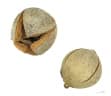
Seed - it can remain viable for a year or more, but germination is much better from seed sown fresh, when it can often be nearly 100%[4]. Sowing in lightly shaded nursery seedbeds has been shown to give better results than sowing in containers. Germination can begin in about 3 weeks[1]. Seedlings are potted up into individual containers when they are about 5cm tall and are then grown on for about 12 months until they are 30cm tall and ready for planting out[4]. The tree has been successfully planted as bare rooted, but use of containerized seedlings yields better results[1]. Seed capsules are clipped from trees when the capsules begin to split. The capsules are sun dried until they split and then shelled by hand. The seed is further dried and then stored in sealed containers in a refrigerator, because viability is lost quickly at ambient air temperatures[1]. Cite as: Tropical Plants Database, Ken Fern. tropical.theferns.info. 2026-02-20. <tropical.theferns.info/viewtropical.php?id=Khaya+senegalensis>
Pollinators
Data unavailable
References
- [1]World Agroforesty Centre — http://www.worldagroforestry.org/ ↩︎An excellent online database of a huge range of trees giving very good information on each plant - its uses, ecology, identity, propagation, pests etc.
- [2]Ecocrop — http://ecocrop.fao.org/ecocrop/srv/en/home ↩︎Basic information on a wide range of useful plants, plus details of environmental needs where available.
- [3]Trees and Shrubs of the Sahel. Their Characteristics and Uses. — von Maydell H. · Deutsche Gesellschaft fur Technische Zusammenarbeit; Germany · 1990 · ISBN 3-8236-1198-4 ↩︎A well-researched book, usually with more than one photograph of each species and good information on the plant and its uses.
- [4]Seed Leaflets — Various · Forest & Landscape. Denmark · http://en.sl.life.ku.dk/Publikationer/Udgivelser/PopulaerPublikationer.aspx?katid={D28373CC-6EF3-4EF8-B097-6D83FABF209E}&serieid={9F1C3DB1-6E7B-4CF1-AF53-F480B0CB40EF}&sort=title ↩︎A series of leaflets, jointly produced by the University of Copenhagen and the Royal Botanic Gardens at Kew, focussing on seed information for a number species, but also giving a lot of other information about each plant.
- [5]African Flowering Plants Database — Conservatoire et Jardin Botaniques. · http://www.ville-ge.ch/musinfo/bd/cjb/africa/recherche.php ↩︎Contains information on over 150,000 plant names (including synonyms) giving a description and habitat, plus a distribution map.
- [6]Flora Zambesiaca — http://apps.kew.org/efloras/fz/intro.html ↩︎An excellent online flora of plants from the Zambezi River basin. It lists a number of the plant uses as well as the habitats and botanical descriptions of the plants.
- [7]Tropix 7 — CIRAD · http://tropix.cirad.fr/en ↩︎An on-line guide to the timbers of 245 species of trees.