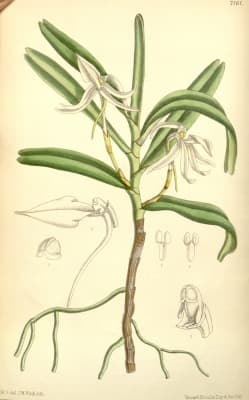
Jumellea fragrans
Jumellea fragrans
Safety & Hazards
None known
Cultivation Details
Not known
Propagation
Seed - surface sow, preferably as soon as it is ripe, and do not allow the compost to dry out. The seed of this species is extremely simple, it has a minute embryo surrounded by a single layer of protective cells. It contains very little food reserves and depends upon a symbiotic relationship with a species of fungus. The fungal hyphae invade the seed and enter the cells of the embryo. The orchid soon begins to digest the fungal tissue and this acts as a food supply for the plant until it is able to obtain nutrients from decaying material in the soil[1]. It is best to use some of the soil that is growing around established plants in order to introduce the fungus, or to sow the seed around a plant of the same species and allow the seedlings to grow on until they are large enough to move. Cite as: Tropical Plants Database, Ken Fern. tropical.theferns.info. 2026-02-20. <tropical.theferns.info/viewtropical.php?id=Jumellea+fragrans>
Pollinators
Data unavailable
References
- [1]The New RHS Dictionary of Gardening. 1992. — Huxley. A. · MacMillan Press · 1992 · ISBN 0-333-47494-5 ↩︎Excellent and very comprehensive, though it contains a number of silly mistakes. Readable yet also very detailed.
- [2]The Orchid Review Vol. 117, No. 1287 — Royal Horticultural Society; Wisley. · 2009 ↩︎An article on the culinary uses of the orchid Jumellea fragrans.
- [3]Dictionary of Economic Plants. — Uphof. J. C. Th. · Weinheim · 1959 · ISBN - ↩︎An excellent and very comprehensive guide but it only gives very short descriptions of the uses without any details of how to utilize the plants. Not for the casual reader.