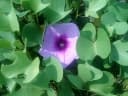
Convolvulaceae FAMILY
Ipomoea pes-caprae
Ipomoea pes-caprae
Edibility
1/5
Medicinal
3/5
Safety & Hazards
None known
Cultivation Details
HabitEvergreen Perennial
GrowthFast
Requires a sunny position in a well-drained soil[1]. It is able to thrive in some of the worst soils imaginable[2]. Plants are tolerant of maritime exposure[1]. Established plants are drought tolerant[1]. A very fast-growing plant[2].
Propagation
Seed - Cite as: Tropical Plants Database, Ken Fern. tropical.theferns.info. 2026-02-20. <tropical.theferns.info/viewtropical.php?id=Ipomoea+pes-caprae>
Pollinators
Data unavailable
References
- [1]Native Plants Hawaii — http://nativeplants.hawaii.edu/plant/ ↩︎A website containing information on a range of native Hawaiian plants, with descriptions, habitat, traditional uses etc.
- [2]Flowers of India — http://www.flowersofindia.net/ ↩︎A wed site of native Indian plants, plus cultivated and naturalized species. It has good quality photos and terse details on more than 3,000 species and cultivars.
- [3]The Useful Plants of West Tropical Africa. — Burkil. H. M. · Royal Botanic Gardens; Kew. · 1985 - 2004 ↩︎Brief descriptions and details of the uses of over 4,000 plants. A superb, if terse, resource, it is also available electronically on the Web - see http://www.aluka.org/
- [4]Plant Resources of Southeast Asia — http://proseanet.org/ ↩︎Lots of information on the uses of the plants of SE Asia.
- [5]Edible Wild Plants of Tanzania — Ruffo, C.K.: Birnie, A. & Tengnas, B. · Regional Land Management Unit; Nairobi. · 2002 · ISBN 9966-896-60-0 ↩︎A very well presented, simple guide to growing and utilizing wild food plants in Tanzania, with line drawings of each plant, a description, habitat and range, non-food as well as food uses, plus basic information on growing the plants.
- [6]Plants of Guam — Moore P.H. & McMakin P. · University of Guam. · 1979 · http://university.uog.edu/cals/people/POG/scipn.htm ↩︎Brief details, usually with a photo, of plants native to the island of Guam, often together with some information on their uses. An online version is available.
- [7]Hawaiian Ethnobotany Online Database — http://www2.bishopmuseum.org/ethnobotanydb/index.asp ↩︎Brief details on over 100 species of Hawaiian plants.
- [8]The Useful Plants of the Island of Guam — Safford W.E. · Smithsonian Institute; Washington. · 1905 · http://www.biodiversitylibrary.org/ ↩︎A very comprehensive, if rather dated, guide to the plants of Guam. It can be downloaded from the Internet.