Cultivation Details
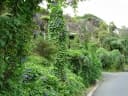
Succeeds in a wide variety of soils and situations, preferring moist sites especially where the soil is rich in nutrients[1]. Often grown as an ornamental, the plant has escaped from cultivation and become naturalized in many areas. It is a noxious weed in parts of Australia, for example, where it carpets the ground and smothers shrubs and small trees[1]. A mature plant can produce hundreds of fragile flowers each day and can leave a messy carpet below. The flowers are dark blue in the morning, turning to purple/magenta by noon and pink by the evening before curling up into a fuchsia-like shape and then falling to the ground in the next day or two[2].
Propagation
Seed - Cite as: Tropical Plants Database, Ken Fern. tropical.theferns.info. 2026-02-20. <tropical.theferns.info/viewtropical.php?id=Ipomoea+indica>
Pollinators
Insects
References
- [1]New South Wales Government; Pest and Weeds Management — http://weeds.dpi.nsw.gov.au/ ↩︎A website with very well-produced factsheets on over 300 noxious and environmental weeds of New South Wales
- [2]Flowers of India — http://www.flowersofindia.net/ ↩︎A wed site of native Indian plants, plus cultivated and naturalized species. It has good quality photos and terse details on more than 3,000 species and cultivars.
- [3]Plant Resources of Southeast Asia — http://proseanet.org/ ↩︎Lots of information on the uses of the plants of SE Asia.