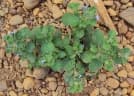
Lamiaceae FAMILY
Hyptis suaveolens
Hyptis suaveolens
Edibility
3/5
Medicinal
3/5
Safety & Hazards
None known
Cultivation Details
HabitShrub
Growth—
The plant is often an abundant weed, sometimes forming dense thickets of considerable extent that are much visited by birds when the seeds are ripe[1]. It commences flowering when about 8 - 12 weeks old, producing copious amounts of seed, which can be spread by water, animals, humans and farm machinery[2, 3]. The flowers are very attractive to pollinating insects[3]. The plant can flower and produce seed all year round[4].
Propagation
Seed - Cite as: Tropical Plants Database, Ken Fern. tropical.theferns.info. 2026-02-20. <tropical.theferns.info/viewtropical.php?id=Hyptis+suaveolens>
Pollinators
Insects
References
- [1]Flora of Guatemala — Standley P.C. & J. A. Steyermark · 1946 - 1976 · http://www.archive.org/ ↩︎A superb reference, though somewhat dated. Gives lots of plant uses as well as information on plant habit and habitat. The entire flora (13 volumes) can now be downloaded from http://www.archive.org/
- [2]Pacific Island Ecosystems at Risk — http://www.hear.org/pier/scientificnames/index.html ↩︎A very good website detailing weed species that have been introduced into the Pacific Islands.
- [3]Flowers of India — http://www.flowersofindia.net/ ↩︎A wed site of native Indian plants, plus cultivated and naturalized species. It has good quality photos and terse details on more than 3,000 species and cultivars.
- [4]Plant Resources of Southeast Asia — http://proseanet.org/ ↩︎Lots of information on the uses of the plants of SE Asia.
- [5]Australian Tropical Rainforest Plants — http://www.anbg.gov.au/cpbr/cd-keys/rfk/index.html ↩︎An online resource giving botanical information, and a little bit about plant usage, for over 2,700 species of plants found in the Australian rainforest.
- [6]Rio Mayo Plants - A study of the flora and vegetation of the valley of the Rio Mayo, Sonora — Gentry H.S. · Carnegie Institution of Washington; Washington DC · 1942 ↩︎One of my favourite authors on native plants, often including their uses. This is an excellent example with lots of information, even though the book is 80 years old.
- [7]Cornucopia - A Source Book of Edible Plants. — Facciola. S. · Kampong Publications · 1990 · ISBN 0-9628087-0-9 ↩︎Excellent. Contains a very wide range of conventional and unconventional food plants (including tropical) and where they can be obtained (mainly N. American nurseries but also research institutes and a lot of other nurseries from around the world.
- [8]The New RHS Dictionary of Gardening. 1992. — Huxley. A. · MacMillan Press · 1992 · ISBN 0-333-47494-5 ↩︎Excellent and very comprehensive, though it contains a number of silly mistakes. Readable yet also very detailed.
- [9]Cornucopia II — Facciola. S. · Kampong Publications, California. · 1998 · ISBN 0-9628087-2-5 ↩︎The second edition of an excellent guide to the edible uses of plants, though it does not give any details of cultivation etc.
- [10]Philippine Medicinal Plants — http://www.stuartxchange.org/CompleteList.html ↩︎A lovely site, giving brief details on the medicinal uses of several hundred (over 400 at the last count) plants in the Philippines, plus a picture of each plant.
- [11]Minor Products of Philippine Forests — Brown. W. H. · Bureau of Forestry, Manilla. · 1920 ↩︎A useful guide to some of the plants of the area, though terse on details. The book is out of copyright and can be legally downloaded from the Internet.
- [12]Hyptis brevipes (Lamiaceae) Extracts Strongly Inhibit the Growth and Development of Spodoptera littoralis (Boisd.) L — Hanem H. Sakr, Shimaa H. Roshdy, & Hesham R. El-Seedi · 2013 · http://www.japsonline.com · ISBN 10.7324/JAPS.2013 ↩︎