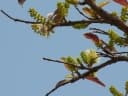
Hymenodictyon orixense
Hymenodictyon orixense
Safety & Hazards
None known
Cultivation Details
A plant of the moist lowland tropics. It grows best in areas where annual daytime temperatures are within the range 22 - 33°c, but can tolerate 5 - 47°c[1]. It can be killed by temperatures of -1°c or lower[1]. It prefers a mean annual rainfall in the range 1,200 - 2,000mm, but tolerates 875 - 2,300mm[1]. Requires a sunny position[1]. Prefers a fertile, well-drained, light soil[1]. Prefers a pH in the range 5.5 - 6.5, tolerating 5 - 7[1]. The tree is not resistant to fire[2]. Regeneration is usually confined to open spaces in the forest, which may explain why the tree is more frequent in (but not restricted to) drier areas where the forest is more open than in the rain forest[2].
Propagation
Seed - direct seeding is not recommended as the seed is very small (about 170 000 seeds/kg) and easily washed away[2]. The seed usually germinates easily, but loses its viability within a year[2]. It should be sown in seed-beds and lightly covered with fine soil or fine sand and watered frequently, but sparingly[2]. The first seedlings appear after 10 days, when 2 - 3 months old they can be pricked out into containers[2]. The more vigorous seedlings can be planted out after one year, others should be kept in the nursery for another year[2]. Seedlings are light-demanding and easily killed by weeds[2]. Cite as: Tropical Plants Database, Ken Fern. tropical.theferns.info. 2026-02-20. <tropical.theferns.info/viewtropical.php?id=Hymenodictyon+orixense>
Pollinators
Data unavailable
References
- [1]Ecocrop — http://ecocrop.fao.org/ecocrop/srv/en/home ↩︎Basic information on a wide range of useful plants, plus details of environmental needs where available.
- [2]World Agroforesty Centre — http://www.worldagroforestry.org/ ↩︎An excellent online database of a huge range of trees giving very good information on each plant - its uses, ecology, identity, propagation, pests etc.
- [3]Dictionary of Economic Plants. — Uphof. J. C. Th. · Weinheim · 1959 · ISBN - ↩︎An excellent and very comprehensive guide but it only gives very short descriptions of the uses without any details of how to utilize the plants. Not for the casual reader.