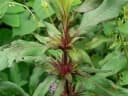
Acanthaceae FAMILY
Hygrophila auriculata
Hygrophila auriculata
Edibility
3/5
Medicinal
2/5
Safety & Hazards
None known
Cultivation Details
HabitAnnual
Growth—
In Tanzania it grows in areas where the mean annual rainfall is in the range 700 - 1,600mm[1]. Thrives in yellowish sediments and black-cotton soil[1]. The plant has pungent spines and is considered to be a serious weed of pastures in some areas[2].
Propagation
Seed - Cite as: Tropical Plants Database, Ken Fern. tropical.theferns.info. 2026-02-20. <tropical.theferns.info/viewtropical.php?id=Hygrophila+auriculata>
Pollinators
Data unavailable
References
- [1]Edible Wild Plants of Tanzania — Ruffo, C.K.: Birnie, A. & Tengnas, B. · Regional Land Management Unit; Nairobi. · 2002 · ISBN 9966-896-60-0 ↩︎A very well presented, simple guide to growing and utilizing wild food plants in Tanzania, with line drawings of each plant, a description, habitat and range, non-food as well as food uses, plus basic information on growing the plants.
- [2]The Useful Plants of West Tropical Africa. — Burkil. H. M. · Royal Botanic Gardens; Kew. · 1985 - 2004 ↩︎Brief descriptions and details of the uses of over 4,000 plants. A superb, if terse, resource, it is also available electronically on the Web - see http://www.aluka.org/
- [3]Flora of Tropical East Africa — Beentje H.J. · Royal Botanic Gardens; Kew. · 2002 · http://plants.jstor.org/search?st=396814 ↩︎Available on-line, a modern flora of East Africa.
- [4]Vitamin C content of commonly eaten green leafy vegetables in fresh and under different storage conditions — Umaramani M. & Sivakanesan R. · 2015 · ISBN 2349 - 1183 ↩︎
- [5]Mansfeld's Database of Agricultural and Horticultural Plants — http://mansfeld.ipk-gatersleben.de/pls/htmldb_pgrc/f?p=185:3:4292127278597336 ↩︎Terse details of a huge range of useful plants.