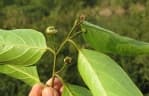
Hydnocarpus pentandrus
Hydnocarpus pentandrus
Safety & Hazards
Although we have seen no specific information for this species, the seeds of many members of this genus contain cyanogetic glycosides[1, 2]. In very small quantities this has been used medicinally, having been shown to stimulate respiration and improve digestion, it is also claimed to be of benefit in the treatment of cancer. In excess, however, it can cause respiratory failure and even death.
Cultivation Details
Grows best on well-drained, sandy, alluvial flats and floodplains along rivers, or at least in moist but well-drained surroundings[2, 3]. Plants take from 20 - 25 years from seed before they start producing seeds[4]. Seeds tend to go rancid rather quickly. Therefore ripe fruits should be opened and the fruit pulp and aril removed from the seeds. Seeds are then washed and dried in the sun. Sun-dried seeds, either whole or broken, are cold-pressed or pressed under concurrent heating to extract the oil. The chemical composition of the end-product of these methods varies[2]. A dioecious species, both male and female forms need to be grown if fruit and seed are required
Propagation
Seed - best sown as soon as it is ripe, when it will usually germinate quickly. Germination of stored seed can be slow, with some species in the genus taking up to 2 years. Sow the seed in a shaded position in a nursery seedbed and keep moist. Grow on the seedlings in shade until large enough to plant out[2]. Cite as: Tropical Plants Database, Ken Fern. tropical.theferns.info. 2026-02-20. <tropical.theferns.info/viewtropical.php?id=Hydnocarpus+pentandrus>
Pollinators
Insects
References
- [1]Medicinal Plants of China — Duke. J. A. and Ayensu. E. S. · Reference Publications, Inc. · 1985 · ISBN 0-917256-20-4 ↩︎Details of over 1,200 medicinal plants of China and brief details of their uses. Often includes an analysis, or at least a list of constituents. Heavy going if you are not into the subject.
- [2]Plant Resources of Southeast Asia — http://proseanet.org/ ↩︎Lots of information on the uses of the plants of SE Asia.
- [3]The Chaulmoogra Tree and some Related Species - A survey conducted in Siam, Burma, Assam and Bengal — Rock J.F. · Government Printing Office, Washington. · 1922 ↩︎A review of various species in the genus Hydnocarpus that are the source of the medicinal oil Chaulmoogra.
- [4]IUCN Red List of Threatened Species — http://www.iucnredlist.org/ ↩︎A list of plants under threat and facing possible extinction, usually with brief details of the threats and information on habitat.
- [5]Handbook of Ayurvedic Medicinal Plants — Kapoor. L. D. · CRC Press, Florida. · 2001 · ISBN 0-8493-2929-9 ↩︎A very detailed book on some of the key Ayurvedic herbs, giving both technical and non-technical information on each plant. The whole is very well referenced.
- [6]A Manual of Indian Timbers. — Gamble. J. S. · Bishen Singh Mahendra Pal Singh · 1972 · ISBN - ↩︎First written in the 19th century, but still a classic, giving a lot of information on the uses and habitats of Indian trees. Not for the casual reader.
- [7]Dictionary of Economic Plants. — Uphof. J. C. Th. · Weinheim · 1959 · ISBN - ↩︎An excellent and very comprehensive guide but it only gives very short descriptions of the uses without any details of how to utilize the plants. Not for the casual reader.
- [8]CosIng — http://ec.europa.eu/growth/tools-databases/cosing/ ↩︎CosIng is the European Commission database for information on cosmetic substances and ingredients.
- [9]Mansfeld's Database of Agricultural and Horticultural Plants — http://mansfeld.ipk-gatersleben.de/pls/htmldb_pgrc/f?p=185:3:4292127278597336 ↩︎Terse details of a huge range of useful plants.