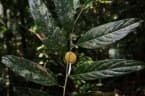
Hydnocarpus kurzii
Hydnocarpus kurzii
Safety & Hazards
The seeds contain cyanogenic glycosides and are toxic. It is advised not to eat pigs nor fish that have been feeding on the seeds, as their flesh induces nausea and vomiting[1]. In very small quantities cyanogenic glycosides have been used medicinally, having been shown to stimulate respiration and improve digestion, they are also claimed to be of benefit in the treatment of cancer. In excess, however, they can cause respiratory failure and even death.
Cultivation Details
A plant of the wet tropics, where it can be found at elevations up to 1,800 metres. The plant grows best in areas where annual daytime annual temperatures fall within the range 28 - 34°c, though it is tolerant of 7 - 42°c[2]. It is tolerant of temperatures to below 2.5°c[2]. It prefers a mean annual rainfall in the range 3,500 - 6,500mm, but can tolerate 2,000 - 8,000mm[2]. Succeeds in full sun and light shade[2]. Tolerant of a range of soils, preferring a pH in the range 4.5 - 5, but tolerating 4 - 5.5[2]. Grows best on well-drained, sandy, alluvial flats and floodplains along rivers, or at least in moist but well-drained surroundings[1, 3]. Seeds tend to go rancid rather quickly. Therefore ripe fruits should be opened and the fruit pulp and aril removed from the seeds. Seeds are then washed and dried in the sun. Sun-dried seeds, either whole or broken, are cold-pressed or pressed under concurrent heating to extract the oil. The chemical composition of the end-product of these methods varies[1]. A dioecious species, both male and female forms need to be grown if fruit and seed are required
Propagation
Seed - best sown as soon as it is ripe, when it will usually germinate quickly. Germination of stored seed can be slow, with some species in the genus taking up to 2 years. Sow the seed in a shaded position in a nursery seedbed and keep moist. Grow on the seedlings in shade until large enough to plant out[1]. Cite as: Tropical Plants Database, Ken Fern. tropical.theferns.info. 2026-02-20. <tropical.theferns.info/viewtropical.php?id=Hydnocarpus+kurzii>
Pollinators
Insects
References
- [1]Plant Resources of Southeast Asia — http://proseanet.org/ ↩︎Lots of information on the uses of the plants of SE Asia.
- [2]Ecocrop — http://ecocrop.fao.org/ecocrop/srv/en/home ↩︎Basic information on a wide range of useful plants, plus details of environmental needs where available.
- [3]The Chaulmoogra Tree and some Related Species - A survey conducted in Siam, Burma, Assam and Bengal — Rock J.F. · Government Printing Office, Washington. · 1922 ↩︎A review of various species in the genus Hydnocarpus that are the source of the medicinal oil Chaulmoogra.
- [4]Flora Malesiana Series 1 — Various · Nationaal Herbarium Nederiand, Universiteit Leiden branch · http://www.archive.org ↩︎A massive treatment of the plants of the Malaysian Archipelago. Much of it has been made available to download from the Internet
- [5]Mansfeld's Database of Agricultural and Horticultural Plants — http://mansfeld.ipk-gatersleben.de/pls/htmldb_pgrc/f?p=185:3:4292127278597336 ↩︎Terse details of a huge range of useful plants.
- [6]IUCN Red List of Threatened Species — http://www.iucnredlist.org/ ↩︎A list of plants under threat and facing possible extinction, usually with brief details of the threats and information on habitat.
- [7]Medicinal Plants of Asia and the Pacific — Wiart C. · CRC Press, Taylor & Francis Group; Florida. · 2006 · ISBN 0-8493-7245-3 ↩︎An excellent look at a range of plants, in particular focussing on the active principles that could be responsible for the medical activities.