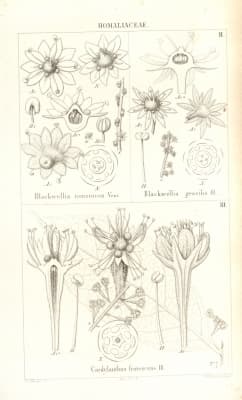
Homalium tomentosum
Homalium tomentosum
Safety & Hazards
None known
Cultivation Details
Found at low elevations, rarely to 700 metres, in tropical areas, especially where the dry monsoon is well pronounced[1]. The plant is not seldom found on calcareous soil[1]. Seedlings can tolerate moderate shade[1]. The plant can tolerate periods when the soil is inundated[2]. The mean heights of trees in a plantation after 2 and 5 years are 3 metres and 5 metres, respectively, with a mean diameter of 7cm at the age of 5 years[1]. Initial growth and canopy closure of H. Tomentosum is slow. This species is resistant to fire, sprouting readinly from dead stumps[1, 2]. It is reported to coppice well[1]. Production of H. Tomentosum is rather low, especially on poor sites[1].
Propagation
Seeds are reported to have a very low germination capacity of less than 5%[1]. Germination starts 3 - 6 weeks after sowing[1]. Direct sowing in the field is fairly successful for this species[1]. Natural regeneration is abundant and seedlings can tolerate moderate shade[1]. Cite as: Tropical Plants Database, Ken Fern. tropical.theferns.info. 2026-02-20. <tropical.theferns.info/viewtropical.php?id=Homalium+tomentosum>
Pollinators
Data unavailable
References
- [1]World Agroforesty Centre — http://www.worldagroforestry.org/ ↩︎An excellent online database of a huge range of trees giving very good information on each plant - its uses, ecology, identity, propagation, pests etc.
- [2]Flora Malesiana Series 1 — Various · Nationaal Herbarium Nederiand, Universiteit Leiden branch · http://www.archive.org ↩︎A massive treatment of the plants of the Malaysian Archipelago. Much of it has been made available to download from the Internet
- [3]A Manual of Indian Timbers. — Gamble. J. S. · Bishen Singh Mahendra Pal Singh · 1972 · ISBN - ↩︎First written in the 19th century, but still a classic, giving a lot of information on the uses and habitats of Indian trees. Not for the casual reader.
- [4]Medicinal Plants of Asia and the Pacific — Wiart C. · CRC Press, Taylor & Francis Group; Florida. · 2006 · ISBN 0-8493-7245-3 ↩︎An excellent look at a range of plants, in particular focussing on the active principles that could be responsible for the medical activities.
- [5]A Manual of the Timbers of the World — Howard A.L. · MacMillan and Co.; London. · 1934 · http://www.biodiversitylibrary.org ↩︎An excellent and comprehensive book on timbers. Rather dated, but still a main source of information for many of the less known woods. It can be downloaded from the Internet.