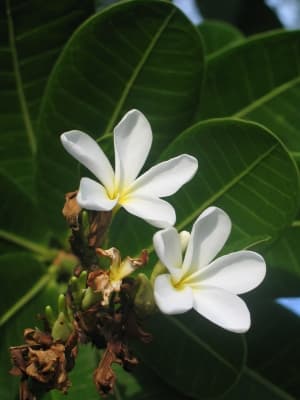
Apocynaceae FAMILY
Himatanthus drasticus
Himatanthus drasticus
Edibility
0/5
Medicinal
3/5
Safety & Hazards
None known
Cultivation Details
HabitDeciduous Tree
GrowthSlow
Grows best in a sunny position[1]. Established plants are drought tolerant[1]. A slow-growing plant[1].
Propagation
Seed - best sown as soon as it is ripe in a sunny position in a nursery seedbed. A low germination rate can be expected, with the seed sprouting within 60 - 80 days[1]. Cite as: Tropical Plants Database, Ken Fern. tropical.theferns.info. 2026-02-20. <tropical.theferns.info/viewtropical.php?id=Himatanthus+drasticus>
Pollinators
Data unavailable
References
- [1]Brazilian Trees. Volume 3. — Lorenzi. H. · Instituto Plantarum De Estudos Da Flora; Brazil. · 2009 · ISBN 85-86714-34-4 ↩︎Information on 350 species of Brazilian trees. Stunning photographs of each species, brief details on the plant, its uses and how to grow it from seed. A superb work, with the minor irritation that the translation from Portuguese is not of the best.
- [2]Medicinal Plants of Brazil — Mors W.B.; Rizzini C.T.; Pereira N.A. · Reference Publications; Michigan. · 2000 · ISBN 0-917256-42-5 ↩︎An extremely concise book, listing approximately 1,500 species and varieties of plants with their botanical name, common name in Brazil, regions in Brazil where the plant is found, a brief list of uses and any medically active compounds in the plant.
- [3]Antitumor activity of leaves of Himatanthus drasticus (Mart.) Plumel-Apocynaceae (Janaguba) in the treatment of Sarc — de Sousa E.L. Et al · Brazilian Journal of Pharmaceutical Sciences · 2010 ↩︎A research paper on the effectiveness of leaf extracts of Himatanthus drasticus in the treatment of cancer.