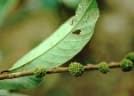
Moraceae FAMILY Least Concern
Helicostylis tomentosa
Helicostylis tomentosa
Edibility
4/5
Medicinal
2/5
Safety & Hazards
The latex of this tree is considered to be toxic when ingested[1].
Cultivation Details
HabitEvergreen Tree
Growth—
Young plants require the dappled shade of the woodland, but become more tolerant of light as they grow larger, eventually accepting full sun[2]. A dioecious species, both male and female forms need to be grown if fruit and seed are required[2].
Propagation
Seed - best sown as soon as it is ripe in a partially shaded position in a nursery seedbed. A low germination rate can generally be expected, with the seed sprouting within 40 - 60 days[2]. Cite as: Tropical Plants Database, Ken Fern. tropical.theferns.info. 2026-02-20. <tropical.theferns.info/viewtropical.php?id=Helicostylis+tomentosa>
Pollinators
Data unavailable
References
- [1]Botanical Museum Leaflets Vol 29 — Harvard University; Cambridge, Massachusetts. · 1983 · http://www.biodiversitylibrary.org ↩︎Some interesting notes on plant uses in tropical America. It can be downloaded from the Internet.
- [2]Brazilian Trees. Volume 3. — Lorenzi. H. · Instituto Plantarum De Estudos Da Flora; Brazil. · 2009 · ISBN 85-86714-34-4 ↩︎Information on 350 species of Brazilian trees. Stunning photographs of each species, brief details on the plant, its uses and how to grow it from seed. A superb work, with the minor irritation that the translation from Portuguese is not of the best.
- [3]IUCN Red List of Threatened Species — http://www.iucnredlist.org/ ↩︎A list of plants under threat and facing possible extinction, usually with brief details of the threats and information on habitat.
- [4]Medicinal Plants of the Guianas — DeFilipps, R. A.; Maina, S. L.; & Crepin, J. · Smithsonian Museum · http://botany.si.edu/bdg/medicinal/index.html ↩︎A down-loadable PDF document of a book in pre-publication awaiting illustration. An excellent, if rather terse, guide to the traditional medicinal uses of the plants of the region
- [5]Botanical Museum Leaflets Vol 28 — Harvard University; Cambridge, Mass. · 1981 · http://www.biodiversitylibrary.org ↩︎An article on the Ethnopharmacological uses of plants in northwestern S. America, amongst many other articles. It can be downloaded from the Internet.
- [6]Tropical Timbers of the World. Ag. Handbook No. 607. — Chudnoff. Martin. · USDA Forest Service. Wisconsin. · 1984 ↩︎Terse details on the properties of the wood of almost 400 species of trees from the Tropics.