Cultivation Details
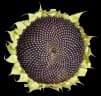
Helianthus annuus is cultivated from the temperate zone through to the tropics, though most commonly in the subtropics and warm temperate zones. They can be grown at elevations up to 2,600 metres in the tropics, but are generally better below 1,500 metres and do not thrive in humid areas[3, 4]. They grow best in areas where annual daytime temperatures are within the range 17 - 34°c, but can tolerate 5 - 45°c[4]. They prefer a mean annual rainfall in the range 600 - 1,000mm, but tolerate 300 - 1,600mm[4]. An easily grown plant, it succeeds in most soils[5, 6, 7], including poor soils provided they are deep and well-drained[8], but it grows best in a deep rich soil[5, 9]. Plants are intolerant of acid or waterlogged conditions[8]. Especially when grown for its edible seed, the plant prefers a sunny position[5, 6, 7, 8] though it also tolerates light shade[5]. Requires a neutral or preferably calcareous soil[9]. Succeeds in soils with a pH in the range of 4.5 - 8.7[8]. As sunflowers have highly efficient root systems, they can be grown in areas which are too dry for many other crops[8]. Established plants are quite drought-resistant except during flowering[7, 8]. Sunflowers are widely grow,n from the tropics to the temperate zone, as a commercial crop, both for their seeds and for the oil that can be expressed from them. Some forms of this plant are being bred for greater cold tolerance and should be more reliable at higher latitudes in the temperate zone[7, 10]. The growth cycle is usually about 120 days, but it ranges from 75 - 180 days depending on the environment and genotype. Sowing to seedling emergence takes 5 - 10 days, emergence to floral initiation 15 - 20days, floral initiation to first flowering 20 - 90 days, flowering 5 - 15 days and flowering to seed maturity 30 - 45 days[3]. The plant is ready for harvesting when the heads have turned yellow-brown and seed moisture content is 10 - 12%, about 120 - 160 days after planting for tall, and 80 - 110 days for short cultivars[3]. World average seed yield is 1.2 tonnes per hectare, though higher yields of 2 - 4 tonnes (1 - 2 tonnes of oil) are obtained in Europe and the United States from modern hybrid cultivars and maximum seed yields of 5 - 6 tonnes have been obtained in field experiments[3]. Pronounced heliotropism is a characteristic of sunflowers. The young heads and leaves face east in the morning and follow the movement of the sun to face west in the evening. This heliotropism decreases gradually during flowering with most mature heads eventually facing east[3]. Sunflower is allogamous with a rather complex system of sporophytic self-incompatibility. However, artificial self-pollination generally results in some degree of seed set and certain genotypes show a high degree of natural self-fertility[3]. The young growth is extremely attractive to slugs, plants can be totally destroyed by them[PFAF]. It is the state flower of Kansas[11]. Three distinct groups of sunflowers are cultivated:- Giant types grow from 1.8 - 4.2 metres tall with flower heads 30 - 50cm in diameter. The seeds are large, white or gray in colour, sometimes with black stripes, and are the best for culinary purposes, though the oil content is lower than for other types. 'Grey Stripe', 'Hopi Black Dye', 'Mammoth Russian' and 'Sundak' are examples of this type[12, 9, 8]. Semi-dwarf types grow from 1.3 - 1.8 m tall, are early maturing and have heads 17 - 23 cm diameter. The seeds are smaller, black, gray or striped, the oil content is also higher. Examples include 'Pole Star' and 'Jupiter' Dwarf types grow from 0.6 - 1.4 m tall, are early maturing and have heads 14 - 16 cm in diameter[269. The seeds are small but the oil content is the highest. Examples include 'Advance' and 'Sunset'[8]. The plant has a strong taproot that can penetrate the soil to depth of 3 metres, it also has a large lateral spread of surface roots[8]. Sunflowers grow badly with potatoes but they do well with cucumbers and corn[13, 14, 15]. A very greedy and vigorous plant, it can inhibit the growth of nearby plants[14]. Plants tend to impoverish the soil if they are grown too often in the same place[7]. A good bee plant, providing large quantities of nectar[13, 6, 16]. The flowers attract beneficial insects such as lacewings and parasitic wasps[17]. These prey on various insect pests, especially aphis[17].
Propagation
Seed - sow in mid spring in situ. An earlier start can be made by sowing 2 - 3 seeds per pot in a greenhouse in early spring. Use a fairly rich compost. Thin to the strongest seedling, give them an occasional liquid feed to make sure they do not become nutrient deficient and plant them out in late spring or early summer. Seed, harvested at 12% moisture content and stored, will retain its viability for several years[8]. Cite as: Temperate Plants Database, Ken Fern. temperate.theferns.info. 2026-02-21. <temperate.theferns.info/plant/Helianthus+annuus>
Pollinators
Bees, Flies
References
- [1]Poisonous Plants in Britain and their Effects on Animals and Man. — Cooper. M. and Johnson. A. · HMSO · 1984 · ISBN 0112425291 ↩︎Concentrates mainly on the effects of poisonous plants to livestock.
- [2]A Field Guide to Medicinal Plants. Eastern and Central N. America. — Foster. S. & Duke. J. A. · Houghton Mifflin Co. · 1990 · ISBN 0395467225 ↩︎A concise book dealing with almost 500 species. A line drawing of each plant is included plus colour photographs of about 100 species. Very good as a field guide, it only gives brief details about the plants medicinal properties.
- [3]Protabase - Plant Resources of Tropical Africa. — http://www.prota.org ↩︎An excellent on-line database with detailed information on over 3,200 species of useful plants of Africa.
- [4]Ecocrop — http://ecocrop.fao.org/ecocrop/srv/en/home ↩︎Basic information on a wide range of useful plants, plus details of environmental needs where available.
- [5]RHS Dictionary of Plants plus Supplement. 1956 — F. Chittendon. · Oxford University Press · 1951 · ISBN - ↩︎Comprehensive listing of species and how to grow them. Somewhat outdated, it has been replaced in 1992 by a new dictionary (see [ 200 ]).
- [6]The Oxford Book of Food Plants. — Harrison. S. Wallis. M. Masefield. G. · Oxford University Press · 1975 · ISBN - ↩︎Good drawings of some of the more common food plants from around the world. Not much information though.
- [7]The Book of Edible Nuts. — Rosengarten. jnr. F. · Walker & Co. · 1984 · ISBN 0802707699 ↩︎A very readable and comprehensive guide. Well illustrated.
- [8]Handbook of Energy Crops — Duke. J. · - · 1983 · https://hort.purdue.edu/newcrop/duke_energy/dukeindex.html · ISBN - ↩︎Published only on the Internet, excellent information on a wide range of both temperate and tropical plants.
- [9]The New RHS Dictionary of Gardening. 1992. — Huxley. A. · MacMillan Press · 1992 · ISBN 0-333-47494-5 ↩︎Excellent and very comprehensive, though it contains a number of silly mistakes. Readable yet also very detailed.
- [10]Alternative Enterprises for Agriculture in the UK. — Carruthers. S. P. (Editor) · Centre for Agricultural Strategy, Univ. of Reading · 1986 · ISBN 0704909820 ↩︎Some suggested alternative commercial crops for Britain. Readable. Produced by a University study group.
- [11]Edible Native Plants of the Rocky Mountains. — Harrington. H. D. · University of New Mexico Press · 1967 · ISBN 0-8623-0343-9 ↩︎A superb book. Very readable, it gives the results of the authors experiments with native edible plants.
- [12]Cornucopia - A Source Book of Edible Plants. — Facciola. S. · Kampong Publications · 1990 · ISBN 0-9628087-0-9 ↩︎Excellent. Contains a very wide range of conventional and unconventional food plants (including tropical) and where they can be obtained (mainly N. American nurseries but also research institutes and a lot of other nurseries from around the world.
- [13]Companion Plants. — Philbrick H. and Gregg R. B. · Watkins · 1979 · ISBN - ↩︎Details of beneficial and antagonistic relationships between neighbouring plants.
- [14]Companion Planting for Successful Gardening. — Riotte. L. · Garden Way, Vermont, USA. · 1978 · ISBN 0-88266-064-0 ↩︎Fairly good.
- [15]A - Z of Companion Planting. — Allardice.P. · Cassell Publishers Ltd. · 1993 · ISBN 0-304-34324-2 ↩︎A well produced and very readable book.
- [16]Herbs — Phillips. R. & Foy. N. · Pan Books Ltd. London. · 1990 · ISBN 0-330-30725-8 ↩︎Deals with all types of herbs including medicinal, culinary, scented and dye plants. Excellent photographs with quite good information on each plant.
- [17]Encyclopaedia of Herbs and their Uses. — Bown. D. · Dorling Kindersley, London. · 1995 · ISBN 0-7513-020-31 ↩︎A very well presented and informative book on herbs from around the globe. Plenty in it for both the casual reader and the serious student. Just one main quibble is the silly way of having two separate entries for each plant.
- [18]A Modern Herbal. — Grieve. · Penguin · 1984 · ISBN 0-14-046-440-9 ↩︎Not so modern (1930's?) but lots of information, mainly temperate plants.
- [19]Tropical Ornamentals; A Guide — Whistler. W. Arthur. · Timber Press Inc. Oregon. · 2000 · ISBN 0-88192-448-2 ↩︎An excellent little guide to some of the more commonly cultivated ornamental plants of the Tropics, often giving some information on the plants other uses.
- [20]Vascular Plants of the Pacific Northwest. — Hitchcock. C. L. · University of Washington Press · 1955 · ISBN - ↩︎A standard flora for Western N. America with lots of information on habitat etc. Five large volumes, it is not for the casual reader.
- [21]Complete Guide to Herbs. — Holtom. J. and Hylton. W. · Rodale Press · 1979 · ISBN 0-87857-262-7 ↩︎A good herbal.
- [22]Common Edible and Useful Plants of the West. — Sweet. M. · Naturegraph Co. · 1962 · ISBN 0-911010-54-8 ↩︎Useful wild plants in Western N. America. A pocket guide.
- [23]Edible Wild Fruits and Nuts of Canada. — Turner. N. J. and Szczawinski. A. · National Museum of Natural Sciences · 1978 · ISBN - ↩︎A very readable guide to some wild foods of Canada.
- [24]Edible and Useful Wild Plants of the United States and Canada. — Saunders. C. F. · Dover Publications · 1976 · ISBN 0-486-23310-3 ↩︎Useful wild plants of America. A pocket guide.
- [25]Medicinal Plants of China — Duke. J. A. and Ayensu. E. S. · Reference Publications, Inc. · 1985 · ISBN 0-917256-20-4 ↩︎Details of over 1,200 medicinal plants of China and brief details of their uses. Often includes an analysis, or at least a list of constituents. Heavy going if you are not into the subject.
- [26]Sturtevant's Edible Plants of the World. — Hedrick. U. P. · Dover Publications · 1972 · ISBN 0-486-20459-6 ↩︎Lots of entries, quite a lot of information in most entries and references.
- [27]Dictionary of Economic Plants. — Uphof. J. C. Th. · Weinheim · 1959 · ISBN - ↩︎An excellent and very comprehensive guide but it only gives very short descriptions of the uses without any details of how to utilize the plants. Not for the casual reader.
- [28]Plants for Man. — Schery. R. W. ↩︎Fairly readable but not very comprehensive. Deals with plants from around the world.
- [29]Encyclopaedia of Medicinal Plants. — Chiej. R. · MacDonald · 1984 · ISBN 0-356-10541-5 ↩︎Covers plants growing in Europe. Also gives other interesting information on the plants. Good photographs.
- [30]Flowers of Europe - A Field Guide. — Polunin. O. · Oxford University Press · 1969 · ISBN 0192176218 ↩︎An excellent and well illustrated pocket guide for those with very large pockets. Also gives some details on plant uses.
- [31]Native Harvests. — Kavasch. B. · Vintage Books · 1979 · ISBN 0-394-72811-4 ↩︎Another guide to the wild foods of America.
- [32]Native American Ethnobotany — Moerman. D. · Timber Press. Oregon. · 1998 · ISBN 0-88192-453-9 ↩︎Very comprehensive but terse guide to the native uses of plants. Excellent bibliography, fully referenced to each plant, giving a pathway to further information. Not for the casual reader.
- [33]A Dictionary of Plants Used by Man. — Usher. G. · Constable · 1974 · ISBN 0094579202 ↩︎Forget the sexist title, this is one of the best books on the subject. Lists a very extensive range of useful plants from around the world with very brief details of the uses. Not for the casual reader.
- [34]The Herb Book. — Lust. J. · Bantam books · 1983 · ISBN 0-553-23827-2 ↩︎Lots of information tightly crammed into a fairly small book.
- [35]CosIng — http://ec.europa.eu/growth/tools-databases/cosing/ ↩︎CosIng is the European Commission database for information on cosmetic substances and ingredients.
- [36]A Weavers Garden — Buchanan. R. · McGraw-Hill Contemporary · 1987 · ISBN 0934026289 ↩︎Covers all aspects of growing your own clothes, from fibre plants to dyes.
- [PFAF]Plants for a Future — pfaf.org ↩︎