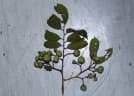
Grewia laevigata
Grewia laevigata
Safety & Hazards
None known
Cultivation Details
Plants can flower and produce fruit all year round[1].
Propagation
Seed - we have no specific information for this species but seed of this genus is generally best sown as soon as it is ripe. Stored seed has a hard seedcoat and may benefit from scarification before sowing in order to speed up and improve germination. This can usually be done by pouring a small amount of nearly boiling water on the seeds (being careful not to cook them!), allowing the mix to cool somewhat and then leaving it in a warm place to soak for 12 - 24 hours. Sow the seeds in situ or in a nursery seedbed or trays - do not allow the compost to become dry. Germination and early growth are usually quite quick. Cuttings - best taken with a heel. Cite as: Tropical Plants Database, Ken Fern. tropical.theferns.info. 2026-02-20. <tropical.theferns.info/viewtropical.php?id=Grewia+laevigata>
Pollinators
Data unavailable
References
- [1]The genus Grewia (Malvaceae: Grewioideae) in Andaman & Nicobar Islands, India with a conservation note on the endemi — Kishor K.C. & Nandikar M.D. · 2019 · https://doi.org/10.11609/jot.4794.11.12.14599-14605 · ISBN 0974-7893 ↩︎
- [2]Flowers of India — http://www.flowersofindia.net/ ↩︎A wed site of native Indian plants, plus cultivated and naturalized species. It has good quality photos and terse details on more than 3,000 species and cultivars.
- [3]Plants of Southeast Asia — http://www.asianplant.net/ ↩︎Excellent site with brief information on the plant, its range, habitat and uses, plus phots of specimens, close-ops of flowers and leaves etc,
- [4]Thai Forest Bulletin (Botany) No. 16 — The Forest Herbarium; Bangkok. · 1986 · ISBN 0495-3843 ↩︎A botanical journal, publishing papers on taxonomy (especially vascular plants), nomenclature, phylogeny, systematics, plant geography, and floristics; also morphology, palynology, cytotaxonomy, chemotaxonomy, anatomy and other relevant disciplines.
- [5]Economic Products of India. Volume 1. — Watt. G. · Government of India: Calcutta. · 1883 ↩︎Although over 100 years old, it still contains a wealth of information on useful plants. Many of the botanical names have been changed since then, so you have to check for up to date names. The book can be downloaded from the Internet.
- [6]IUCN Red List of Threatened Species — http://www.iucnredlist.org/ ↩︎A list of plants under threat and facing possible extinction, usually with brief details of the threats and information on habitat.
- [7]Flora of China — Missouri Botanical Garden Press; St. Louis. · 1994 · http://flora.huh.harvard.edu/china/ ↩︎An excellent, comprehensive resource in 25 volumes. In addition to the botanical information the flora also gives basic information on habitat and some uses. An on-line version is also available.
- [8]Minor Products of Philippine Forests — Brown. W. H. · Bureau of Forestry, Manilla. · 1920 ↩︎A useful guide to some of the plants of the area, though terse on details. The book is out of copyright and can be legally downloaded from the Internet.
- [9]Phytochemical and Pharmacological Properties of the Genus Grewia; A Review — Goyal P.K. · 2012 · ISBN 0975-1491 ↩︎