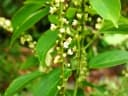
Gouania tiliifolia
Gouania tiliifolia
Safety & Hazards
The bark contains saponins and is used to stupefy fish in rivers[1]. Although poisonous, saponins are poorly absorbed by the human body and so most pass through without harm. Saponins are quite bitter and can be found in many common foods such as some beans. They can be removed by carefully leaching in running water. Thorough cooking, and perhaps changing the cooking water once, will also normally remove most of them. However, it is not advisable to eat large quantities of food that contain saponins. Saponins are much more toxic to some creatures, such as fish, and hunting tribes have traditionally put large quantities of them in streams, lakes etc in order to stupefy or kill the fish[PFAF].
Cultivation Details
Not known
Propagation
Seed - Cite as: Tropical Plants Database, Ken Fern. tropical.theferns.info. 2026-02-20. <tropical.theferns.info/viewtropical.php?id=Gouania+tiliifolia>
Pollinators
Data unavailable
References
- [1]Medicinal Plants of the Philippines — Bureau of Plant Industry, Philippines. · http://www.bpi.da.gov.ph/Publications/mp/mplants.html ↩︎An Internet site from the Philippines Department of Agriculture, giving information in a readable way on the medicinal uses of many plants in their area.
- [2]Dictionary of Economic Plants. — Uphof. J. C. Th. · Weinheim · 1959 · ISBN - ↩︎An excellent and very comprehensive guide but it only gives very short descriptions of the uses without any details of how to utilize the plants. Not for the casual reader.
- [3]Minor Products of Philippine Forests — Brown. W. H. · Bureau of Forestry, Manilla. · 1920 ↩︎A useful guide to some of the plants of the area, though terse on details. The book is out of copyright and can be legally downloaded from the Internet.
- [PFAF]Plants for a Future — pfaf.org ↩︎