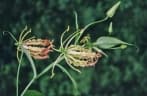
Gloriosa superba
Gloriosa superba
Safety & Hazards
The whole plant is highly toxic due to the presence of the alkaloid colchicine[1, 2]. Diarrhoea, nausea, vomiting and abdominal pains are often the first signs of poisoning. The diarrhoea may become severe and haemorrhagic, and can thus lead to metabolic acidosis, dehydration, hypotension and shock. A burning sensation in the throat, stomach and skin may also be an early sign of intoxication. Severe reactions include extensive vascular damage and acute renal toxicity with oliguria and haematuria. The patients may develop convulsions, delirium, muscle weakness, neuropathy and ascending paralysis of the central nervous system. In patients who have taken an overdose of Gloriosa superba bulbs, death occurs as a result of respiratory depression and cardiovascular collapse[2].
Cultivation Details
A plant of the lowland tropics and subtropics, where it can be found at elevations up to 600 metres, the plant has a clear preference for seasonal, monsoon climates with a pronounced dry season[2]. The plant is not resistant to frost[3]. Succeeds in full sun to partial shade[3]. Prefers a moist but well-drained, humus-rich soil[3]. Prefers an acid to neutral soil[4]. The plant has often escaped from cultivation and has been classified as 'Invasive' in some areas[5]. Plants propagated from seeds take 3 - 4years to bloom[4]. Plants can flower and produce seeds all year round, though mainly during the rainy season[2]. In Tamil Nadu, India, small-scale plantings, raised from tubers, yield on average 250 - 300 kilos of seed per hectare from the second year onwards[2]. In South Africa the seed production of 'wild-type' plants is positively correlated with height of the plant, and is on average 258 seeds per plant for plants 60 - 65cm tall compared with about 30 seeds per plant for plants 30 - 40cm tall[2].
Propagation
Seed - Chemical scarification (e.g. with 1% hypochlorite) or removal of the sarcotesta reduces seed dormancy from 6 - 9 months to about 4 months, and accelerates germination from 29 - 30 days to 11 - 15 days[2]. Germination rates as high as 97% were reached for seeds incubated at 20 - 25°c for a period of 31 days[2]. Higher temperatures have adverse effects[2]. Vegetative propagation by tubers is a common practice, but not very suitable for the establishment of large plantings. The maximum number of daughter corms produced per plant is two. Separating the bilobed hypopodial tubers produces a higher percentage of flowering plants than leaving the tubers undivided (about 97% versus about 63%)[2]. Tuber dormancy can be overcome by soaking in continuously aerated water. Small tubers have been found to have a higher multiplication rate than bigger ones[2]. Cite as: Tropical Plants Database, Ken Fern. tropical.theferns.info. 2026-02-20. <tropical.theferns.info/viewtropical.php?id=Gloriosa+superba>
Pollinators
Sugar Birds, Butterflies
References
- [1]Poisonous Plants of North Carolina — http://www.ces.ncsu.edu/depts/hort/consumer/poison/poison.htm ↩︎An excellent concise but comprehensive guide to toxic plants that grow in N. Carolina. It lists even those plants that are of very low toxicity, including several well-known food plants such as carrots and potatoes.
- [2]Plant Resources of Southeast Asia — http://proseanet.org/ ↩︎Lots of information on the uses of the plants of SE Asia.
- [3]KemperCentreForHomeGardeningPlantFinder — Missouri Botanical Garden · http://www.mobot.org/gardeninghelp/plantfinder/ ↩︎Basic cultivation details, plant uses, habitat etc for several thousand species of plants, mainly from the temperate zone.
- [4]Protabase - Plant Resources of Tropical Africa. — http://www.prota.org ↩︎An excellent on-line database with detailed information on over 3,200 species of useful plants of Africa.
- [5]Pacific Island Ecosystems at Risk — http://www.hear.org/pier/scientificnames/index.html ↩︎A very good website detailing weed species that have been introduced into the Pacific Islands.
- [6]Asean Tropical Plant Database — http://211.114.21.20/tropicalplant/index.jsp ↩︎Terse details, with photos, of many of the plants growing in the tropical forests of southeast Asia. Gives some details of plant uses along with a description of the plant and its range.
- [7]New Crops FactSheets — Purdue University · http://www.hort.purdue.edu/newcrop/default.html ↩︎A website dedicated to giving information on potential new agricultural crops.
- [8]Gemsbok Bean and Kalahari Truffle — Leffers A. · Gamsberg MacMillan; Namibia. · 2003 · ISBN 99916-0-491-X ↩︎Details of the traditional uses of over 200 species of plants in northeastern Namibia. Written for the non-expert, there is usually at least one photograph with each plant entry.
- [9]PlantZAfrica.com — http://www.plantzafrica.com ↩︎An excellent site giving detailed descriptions and uses of many S. African plants.