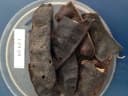
Gleditsia fera
Gleditsia fera
Safety & Hazards
The seed contains saponins[1]. Although poisonous, saponins also have a range of medicinal applications and many saponin-rich plants are used in herbalism (particularly as emetics, expectorants and febrifuges) or as sources of raw materials for the pharmaceutical industry. Saponins are also found in a number of common foods, such as many beans. Saponins have a quite bitter flavour and are in general poorly absorbed by the human body, so most pass through without harm. They can be removed by carefully leaching in running water. Thorough cooking, and perhaps changing the cooking water once, will also normally remove most of them. However, it is not advisable to eat large quantities of raw foods that contain saponins. Saponins are much more toxic to many cold-blooded creatures, such as fish, and hunting tribes have traditionally put large quantities of them in streams, lakes etc in order to stupefy or kill the fish and make them easy to catch[PFAF].
Cultivation Details
Gleditsia fera is native to subtropical and tropical areas of southern Asia, being found from southern China to the Philippines and Indonesia. It is not very cold-hardy, with older trees only being able to tolerate light frosts. In addition, the tree has a habit, especially when young, of producing new growth until quite late in the season. Especially in areas where the summers are not hot, this new growth will not ripen fully and will be liable to be cut back by the cold in the winter. Older plants tend to lose this habit[2]. Easily grown in a loamy soil, requiring a sunny position[2]. Succeeds in most soils[3] including sandy ones[4]. Established plants tolerate drought[5] and atmospheric pollution[3]. Trees have a light canopy, they come into leaf late in the spring and drop their leaves in early autumn[3] making them an excellent top storey tree in a woodland garden. Plants in this genus are notably resistant to honey fungus[3]. Although many species within the family Fabaceae have a symbiotic relationship with soil bacteria, this species is said to be devoid of such a relationship and therefore does not fix atmospheric nitrogen[6].
Propagation
Seed - pre-soak for 24 hours in warm water and then sow in spring in a greenhouse[7]. The seed should have swollen up, in which case it can be sown, if it has not swollen then soak it for another 24 hours in warm water. If this does not work then file away some of the seed coat but be careful not to damage the embryo[7]. Further soaking should then cause the seed to swell. One it has swollen, the seed should germinate within 2 - 4 weeks at 20°c. As soon as they are large enough to handle, prick the seedlings out into individual deep pots and plant them out into their permanent positions in the summer. Give the plants some protection from the cold for their first few winters outdoors. Cite as: Temperate Plants Database, Ken Fern. temperate.theferns.info. 2026-02-21. <temperate.theferns.info/plant/Gleditsia+fera>
Pollinators
Data unavailable
References
- [1]Flora of China — Missouri Botanical Garden Press; St. Louis. · 1994 · http://flora.huh.harvard.edu/china/ ↩︎An excellent, comprehensive resource in 25 volumes. In addition to the botanical information the flora also gives basic information on habitat and some uses. An on-line version is also available.
- [2]Trees and Shrubs Hardy in Great Britain. Vol 1 - 4 and Supplement. — Bean. W. · Murray · 1981 · ISBN - ↩︎A classic with a wealth of information on the plants, but poor on pictures.
- [3]The New RHS Dictionary of Gardening. 1992. — Huxley. A. · MacMillan Press · 1992 · ISBN 0-333-47494-5 ↩︎Excellent and very comprehensive, though it contains a number of silly mistakes. Readable yet also very detailed.
- [4]The RHS Gardener's Encyclopedia of Plants and Flowers — Brickell. C. · Dorling Kindersley Publishers Ltd. · 1990 · ISBN 0-86318-386-7 ↩︎Excellent range of photographs, some cultivation details but very little information on plant uses.
- [5]RHS Dictionary of Plants plus Supplement. 1956 — F. Chittendon. · Oxford University Press · 1951 · ISBN - ↩︎Comprehensive listing of species and how to grow them. Somewhat outdated, it has been replaced in 1992 by a new dictionary (see [ 200 ]).
- [6]Nodulation Plants in GRIN Taxonomy — United States Department of Agriculture · http://www.ars-grin.gov/~sbmljw/cgi-bin/taxnodul.pl?language=en ↩︎An online database listing plants that have either positive or negative reports on root and stem nodulation with nitrogen-fixing bacteria.
- [7]Propagation of Trees, Shrubs and Conifers. — Sheat. W. G. · MacMillan and Co · 1948 · ISBN - ↩︎A bit dated but a good book on propagation techniques with specific details for a wide range of plants.
- [8]Flora Malesiana Series 1 — Various · Nationaal Herbarium Nederiand, Universiteit Leiden branch · http://www.archive.org ↩︎A massive treatment of the plants of the Malaysian Archipelago. Much of it has been made available to download from the Internet
- [9]Plant Resources of Southeast Asia — http://proseanet.org/ ↩︎Lots of information on the uses of the plants of SE Asia.
- [10]CosIng — http://ec.europa.eu/growth/tools-databases/cosing/ ↩︎CosIng is the European Commission database for information on cosmetic substances and ingredients.
- [PFAF]Plants for a Future — pfaf.org ↩︎