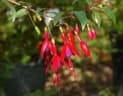
Fuchsia regia
Fuchsia regia
Safety & Hazards
None known
Cultivation Details
A plant of moderate elevations in the tropics and subtropics, where it is found at elevations from 700 - 2,400 metres[1]. Fuchsia species flower and fruit mainly on new wood produced in the same growing season. Any pruning, therefore, is best carried out at the start of the growing season, cutting out old wood in order to encourage vigorous new growth[2].
Propagation
Seed - best sown as soon as it is ripe[2] though stored seed can also be used. Surface sow the seed in a semi-shaded position in a seed tray, gently pressing the seed into the compost, and do not allow the compost to dry out[2]. Germination should take place in less than 6 weeks. Prick out the seedlings into individual pots when they are large enough to handle, and grow them on until large enough to plant out. Inter-nodal cuttings of greenwood, 5 - 8cm long in a frame. Quick and easy, a high percentage take[3, PFAF]. Inter-nodal cuttings of half-ripe wood in a frame. Very quick and easy, treat as greenwood cuttings above[PFAF]. Cuttings usually succeed at any time during the growing season[PFAF]. Cite as: Tropical Plants Database, Ken Fern. tropical.theferns.info. 2026-02-20. <tropical.theferns.info/viewtropical.php?id=Fuchsia+regia>
Pollinators
Humming birds, Bees, Self
References
- [1]Annals of the Missouri Botanical Garden Vol. 76 — Missouri Botanical Garden · 1989 ↩︎An excellent botanical publication, available for download from the Internet. This volume contains a monograph of the genus Zapoteca (Calliandra) amongst other things.
- [2]The New RHS Dictionary of Gardening. 1992. — Huxley. A. · MacMillan Press · 1992 · ISBN 0-333-47494-5 ↩︎Excellent and very comprehensive, though it contains a number of silly mistakes. Readable yet also very detailed.
- [3]Propagation of Trees, Shrubs and Conifers. — Sheat. W. G. · MacMillan and Co · 1948 · ISBN - ↩︎A bit dated but a good book on propagation techniques with specific details for a wide range of plants.
- [4]Brazilian Fruits and Cultivated Exotics — Lorenzi. H.; Bacher. L.; Lacerda. M.; Sartori. S. · Instituto Plantarum De Estudos Da Flora LTDA; Brazil. · 2000 · ISBN 85-867174-24-0 ↩︎A superb book, giving information on several hundred fruit species. Each entry has a brief description of the plant and its uses, accompanied by one to many excellent quality photographs of the fruits.
- [PFAF]Plants for a Future — pfaf.org ↩︎