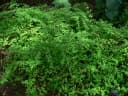
Fuchsia microphylla
Fuchsia microphylla
Safety & Hazards
None known
Cultivation Details
A plant of moderate to higher elevations in the tropics, also succeeding in subtropical climates and the warmer regions of the temperate zone. Plants are not very cold-hardy, tolerating occasional temperatures down to about -3°c without damage[1]. If top growth is killed back by frost, the plant will often resprout from the base so long as the winter is mild[PFAF]. A plant at Heligan gardens in Cornwall, England (hardiness zone 8) is thriving and fruiting well in the fairly deep shade of a woodland garden[PFAF]. Another specimen, growing in a sheltered position outside a greenhouse at Oxford Botanical Gardens (hardiness zone 6 - 7) seems to be hardy there[PFAF]. Since Oxford experiences lots of frosts and usually some snow in the winter, this suggests that it is possible to grow this species in many parts of Britain, especially if grown against a wall[PFAF]. Succeeds in any fertile well-drained circum-neutral soil[2]. Succeeds in a good loam if sand and leafmold are added[3]. Plants grow best in cool summer conditions with good light[1]. Fuchsia species flower and fruit mainly on new wood produced in the same growing season. Any pruning, therefore, is best carried out at the start of the growing season, cutting out old wood in order to encourage vigorous new growth[2]. A gynodioecious species with some plants producing only female flowers and others producing hermaphrodite flowers[4]. Gynodioecy occurs as a result of a genetic mutation that inhibits a hermaphroditic plant from producing pollen, while keeping the female reproductive parts intact. Plants seem to be immune to the predations of rabbits[5]. A good bee plant[6]. A polymorphic species, a number of sub-species are recognised[4]. This species is not very cold-hardy, [1]. It could possibly be grown outdoors in the milder areas of the country, especially if given the protection of a woodland or a wall[PFAF].
Propagation
Seed - best sown as soon as it is ripe[2] though it can also be sown in the spring[3]. Surface sow the seed in pots in a warm greenhouse and do not allow the compost to dry out[2]. Germination should take place in less than 6 weeks. Prick out the seedlings into individual pots when they are large enough to handle, and grow them on in the greenhouse for at least their first winter. Plant out in late spring or early summer, after the last expected frosts. Inter-nodal cuttings of greenwood, 5 - 8cm long, May/early summer in a frame. Quick and easy, a high percentage take[7, PFAF]. Overwinter in the greenhouse for the first year and plant out after the last expected frosts. Inter-nodal cuttings of half-ripe wood, mid summer in a frame. Very quick and easy, treat as greenwood cuttings above[PFAF]. Cuttings usually succeed at any time during the growing season[PFAF]. Cite as: Temperate Plants Database, Ken Fern. temperate.theferns.info. 2026-02-21. <temperate.theferns.info/plant/Fuchsia+microphylla>
Pollinators
Insects
References
- [1]Conservatory and Indoor Plants Volumes 1 & 2 — Phillips. R. & Rix. M. · Pan Books, London. · 1998 · ISBN 0-330-37376-5 ↩︎Excellent photos of over 1,100 species and cultivars with habits and cultivation details plus a few plant uses. Many species are too tender for outdoors in Britain though there are many that can be grown outside.
- [2]The New RHS Dictionary of Gardening. 1992. — Huxley. A. · MacMillan Press · 1992 · ISBN 0-333-47494-5 ↩︎Excellent and very comprehensive, though it contains a number of silly mistakes. Readable yet also very detailed.
- [3]RHS Dictionary of Plants plus Supplement. 1956 — F. Chittendon. · Oxford University Press · 1951 · ISBN - ↩︎Comprehensive listing of species and how to grow them. Somewhat outdated, it has been replaced in 1992 by a new dictionary (see [ 200 ]).
- [4]Trees and Shrubs Hardy in Great Britain. Vol 1 - 4 and Supplement. — Bean. W. · Murray · 1981 · ISBN - ↩︎A classic with a wealth of information on the plants, but poor on pictures.
- [5]Perennial Garden Plants — Thomas. G. S. · J. M. Dent & Sons, London. · 1990 · ISBN 0 460 86048 8 ↩︎A concise guide to a wide range of perennials. Lots of cultivation guides, very little on plant uses.
- [6]Garden Plants Valuable to Bees. — International Bee Research Association. · International Bee Research Association. · 1981 · ISBN - ↩︎The title says it all.
- [7]Propagation of Trees, Shrubs and Conifers. — Sheat. W. G. · MacMillan and Co · 1948 · ISBN - ↩︎A bit dated but a good book on propagation techniques with specific details for a wide range of plants.
- [8]Flora of Guatemala — Standley P.C. & J. A. Steyermark · 1946 - 1976 · http://www.archive.org/ ↩︎A superb reference, though somewhat dated. Gives lots of plant uses as well as information on plant habit and habitat. The entire flora (13 volumes) can now be downloaded from http://www.archive.org/
- [PFAF]Plants for a Future — pfaf.org ↩︎