Simaroubaceae FAMILY
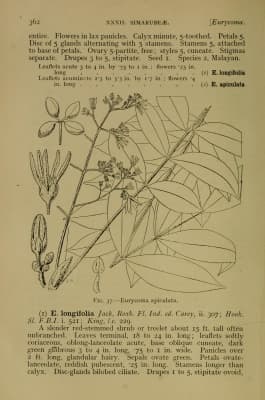
Eurycoma apiculata
Eurycoma apiculata
Edibility
0/5
Medicinal
2/5
Safety & Hazards
There is only a little evidence which clearly assesses the toxicity of the plant. Can we reasonably expect a plant abounding with quassinoids to be devoid of toxic effects? Probably not. The very little toxicological evidence presented thus far is consistent with the view that the plant is poisonous and should not be used internally. Does it promote prostate tumours, one wonders?[1].
Cultivation Details
HabitTree
Growth—
This genus has a distinct preference for acid, leached sandy soils[2].
Propagation
Seed - Cite as: Tropical Plants Database, Ken Fern. tropical.theferns.info. 2026-02-20. <tropical.theferns.info/viewtropical.php?id=Eurycoma+apiculata>
Pollinators
Data unavailable
References
- [1]Medicinal Plants of Asia and the Pacific — Wiart C. · CRC Press, Taylor & Francis Group; Florida. · 2006 · ISBN 0-8493-7245-3 ↩︎An excellent look at a range of plants, in particular focussing on the active principles that could be responsible for the medical activities.
- [2]Flora Malesiana Series 1 — Various · Nationaal Herbarium Nederiand, Universiteit Leiden branch · http://www.archive.org ↩︎A massive treatment of the plants of the Malaysian Archipelago. Much of it has been made available to download from the Internet
- [3]Plant Resources of Southeast Asia — http://proseanet.org/ ↩︎Lots of information on the uses of the plants of SE Asia.