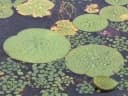
Euryale ferox
Euryale ferox
Safety & Hazards
None known
Cultivation Details
Euryale ferox is a plant of the subtropics and tropics. This species is not very cold hardy and only succeeds outdoors in the mildest regions of the temperate zone. A water plant, it requires a rich soil, preferably growing in still water[1]. It can be grown in still or slowly flowing water up to 5 metres deep[2]. Individual plants require about 0.75 cubic metres of root run[2].
Propagation
Seed - best sown as soon as it is ripe, the seed has a short viability and must not be allowed to become dry. Sow the seed in pots in a greenhouse at about 21°c and immerse the pots in water. As soon as they are large enough to handle, prick the seedlings out into individual pots and grow them on in the greenhouse for at least their first winter. Plant them out into their permanent positions in late spring or early summer, after the last expected frosts. Cite as: Temperate Plants Database, Ken Fern. temperate.theferns.info. 2026-02-21. <temperate.theferns.info/plant/Euryale+ferox>
Pollinators
Data unavailable
References
- [1]Encyclopaedia of Herbs and their Uses. — Bown. D. · Dorling Kindersley, London. · 1995 · ISBN 0-7513-020-31 ↩︎A very well presented and informative book on herbs from around the globe. Plenty in it for both the casual reader and the serious student. Just one main quibble is the silly way of having two separate entries for each plant.
- [2]The New RHS Dictionary of Gardening. 1992. — Huxley. A. · MacMillan Press · 1992 · ISBN 0-333-47494-5 ↩︎Excellent and very comprehensive, though it contains a number of silly mistakes. Readable yet also very detailed.
- [3]Cornucopia - A Source Book of Edible Plants. — Facciola. S. · Kampong Publications · 1990 · ISBN 0-9628087-0-9 ↩︎Excellent. Contains a very wide range of conventional and unconventional food plants (including tropical) and where they can be obtained (mainly N. American nurseries but also research institutes and a lot of other nurseries from around the world.
- [4]Nuts. — Howes. F. N. · Faber · 1948 · ISBN - ↩︎Rather old but still a masterpiece. Has sections on tropical and temperate plants with edible nuts plus a section on nut plants in Britain. Very readable.
- [5]IUCN Red List of Threatened Species — http://www.iucnredlist.org/ ↩︎A list of plants under threat and facing possible extinction, usually with brief details of the threats and information on habitat.
- [6]Flora of Japan. (English translation) — Ohwi. G. · Smithsonian Institution · 1965 · ISBN - ↩︎The standard work. Brilliant, but not for the casual reader.
- [7]Sturtevant's Edible Plants of the World. — Hedrick. U. P. · Dover Publications · 1972 · ISBN 0-486-20459-6 ↩︎Lots of entries, quite a lot of information in most entries and references.
- [8]Economic Products of India. Volume 1. — Watt. G. · Government of India: Calcutta. · 1883 ↩︎Although over 100 years old, it still contains a wealth of information on useful plants. Many of the botanical names have been changed since then, so you have to check for up to date names. The book can be downloaded from the Internet.
- [9]Dictionary of Economic Plants. — Uphof. J. C. Th. · Weinheim · 1959 · ISBN - ↩︎An excellent and very comprehensive guide but it only gives very short descriptions of the uses without any details of how to utilize the plants. Not for the casual reader.
- [10]Medicinal Plants of China — Duke. J. A. and Ayensu. E. S. · Reference Publications, Inc. · 1985 · ISBN 0-917256-20-4 ↩︎Details of over 1,200 medicinal plants of China and brief details of their uses. Often includes an analysis, or at least a list of constituents. Heavy going if you are not into the subject.
- [11]Medicinal Plants in the Republic of Korea — World Health Organisation, Manila · 1998 · ISBN 92 9061 120 0 ↩︎An excellent book with terse details about the medicinal uses of the plants with references to scientific trials. All plants are described, illustrated and brief details of habitats given.