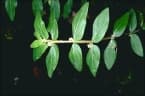
Euphorbia hirta
Euphorbia hirta
Safety & Hazards
The sap contains a latex which is toxic on ingestion and highly irritant externally, causing photosensitive skin reactions and severe inflammation, especially on contact with eyes or open cuts. The toxicity can remain high even in dried plant material[1]. Prolonged and regular contact with the sap is inadvisable because of its carcinogenic nature[2].
Cultivation Details
Euphorbia hirta is a widespread plant that is found native or naturalized throughout tropical and subtropical regions of the world. It is not frost tolerant, but can be grown as an annual in temperate regions with warm to hot summers. Prefers a light well-drained moderately rich loam in an open sunny position[1]. Hybridizes with other members of this genus[1]. The ripe seed is released explosively from the seed capsules[1]. Members of this genus are rarely if ever troubled by browsing deer or rabbits[3]. This genus has been singled out as a potential source of latex (for making rubber) for the temperate zone, although no individual species has been singled out[4]. Euphorbia hirta is a host to many fungal pathogens and may as such act as a reservoir of pathogenic fungi, which can infect nearby susceptible crops. Trypanosomatid flagellates (Phytomonas spp.) were detected in Euphorbia hirta plants in coconut plantations. Euphorbia hirta also acts as a host to several insect vectors, including the aphid Aphis craccivora, a vector of the rosette virus disease of groundnut, and Aphis gossypii[5].
Propagation
Seed - sow mid to late spring in situ. Germination usually takes place within 2 - 3 weeks at 20°c. It might be best to sow the seed in a cool greenhouse in early early spring. When they are large enough to handle, prick the seedlings out into individual pots and plant out the seedlings in late May. This will give the plants longer to grow and mature. Cite as: Temperate Plants Database, Ken Fern. temperate.theferns.info. 2026-02-21. <temperate.theferns.info/plant/Euphorbia+hirta>
Pollinators
Insects
References
- [1]The New RHS Dictionary of Gardening. 1992. — Huxley. A. · MacMillan Press · 1992 · ISBN 0-333-47494-5 ↩︎Excellent and very comprehensive, though it contains a number of silly mistakes. Readable yet also very detailed.
- [2]The New Plantsman. Volume 1, 1994. — Matthews. V. · Royal Horticultural Society · 1994 · ISBN 1352-4186 ↩︎A quarterly magazine, it has articles on Himalayacalamus hookerianus, hardy Euphorbias and an excellent article on Hippophae spp.
- [3]Perennial Garden Plants — Thomas. G. S. · J. M. Dent & Sons, London. · 1990 · ISBN 0 460 86048 8 ↩︎A concise guide to a wide range of perennials. Lots of cultivation guides, very little on plant uses.
- [4]Alternative Enterprises for Agriculture in the UK. — Carruthers. S. P. (Editor) · Centre for Agricultural Strategy, Univ. of Reading · 1986 · ISBN 0704909820 ↩︎Some suggested alternative commercial crops for Britain. Readable. Produced by a University study group.
- [5]Protabase - Plant Resources of Tropical Africa. — http://www.prota.org ↩︎An excellent on-line database with detailed information on over 3,200 species of useful plants of Africa.
- [6]Invasive Species Compendium — http://www.cabi.org ↩︎An immense resource - in depth information on over 900 species of invasive plants (it also has information on animals, fungi etc).
- [7]Flora of Japan. (English translation) — Ohwi. G. · Smithsonian Institution · 1965 · ISBN - ↩︎The standard work. Brilliant, but not for the casual reader.
- [8]Plants and People of Nepal — Manandhar. N. P. · Timber Press. Oregon. · 2002 · ISBN 0-88192-527-6 ↩︎Excellent book, covering over 1,500 species of useful plants from Nepal together with information on the geography and peoples of Nepal. Good descriptions of the plants with terse notes on their uses.
- [9]Plants for Human Consumption. — Kunkel. G. · Koeltz Scientific Books · 1984 · ISBN 3874292169 ↩︎An excellent book for the dedicated. A comprehensive listing of Latin names with a brief list of edible parts.
- [10]Famine Foods listed in the Chiu-Huang Pen-ts'ao. — Reid. B. E. · Southern Materials Centre; Taipei · 1977 · ISBN - ↩︎A translation of an ancient Chinese book on edible wild foods. Fascinating.
- [11]The Encyclopedia of Herbs and Herbalism — Stuart. M. (Editor) · Orbis Publishing. London. · 1979 · ISBN 0-85613-067-2 ↩︎Excellent herbal with good concise information on over 400 herbs.
- [12]Medicinal Plants of China — Duke. J. A. and Ayensu. E. S. · Reference Publications, Inc. · 1985 · ISBN 0-917256-20-4 ↩︎Details of over 1,200 medicinal plants of China and brief details of their uses. Often includes an analysis, or at least a list of constituents. Heavy going if you are not into the subject.
- [13]Estrogen-like activities and cytotoxicity effects of Thai herbal medicines as natural ingredients in anti-ageing — Bancha Yingngam, Nuttapun Supaka & Wandee Rungseevijitprapa · 2011 · http://10.5897/JMPR11.1223 · ISBN 1996-0875 ↩︎
- [14]Encyclopaedia of Herbs and their Uses. — Bown. D. · Dorling Kindersley, London. · 1995 · ISBN 0-7513-020-31 ↩︎A very well presented and informative book on herbs from around the globe. Plenty in it for both the casual reader and the serious student. Just one main quibble is the silly way of having two separate entries for each plant.
- [15]Glossary of Indian Medicinal Plants (Including the Supplement). — Chopra. R. N., Nayar. S. L. and Chopra. I. C. · Council of Scientific and Industrial Research, New Delhi. · 1986 · ISBN - ↩︎Very terse details of medicinal uses of plants with a wide range of references and details of research into the plants chemistry. Not for the casual reader.
- [16]The Encyclopedia of Medicinal Plants — Chevallier. A. · Dorling Kindersley. London · 1996 · ISBN 9-780751-303148 ↩︎An excellent guide to over 500 of the more well known medicinal herbs from around the world.
- [17]A Modern Herbal. — Grieve. · Penguin · 1984 · ISBN 0-14-046-440-9 ↩︎Not so modern (1930's?) but lots of information, mainly temperate plants.
- [18]Useful Plants of the Siona and Secoya Indians of Eastern Ecuador. — Vickers W.T.; Plowman T. · Field Museum of Natural History; USA. · 1984 · http://www.biodiversitylibrary.org · ISBN 0015 - 0746 ↩︎Very terse, but it gives the uses of a large number of species. It can be downloaded from the Internet.
- [PFAF]Plants for a Future — pfaf.org ↩︎