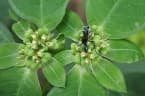
Cultivation Details
Prefers a position in full sun, but is shade-tolerant[1]. This species is a common and troublesome, nitrophilic weed in arable land in tropical Africa, and should be controlled. Hand weeding is commonly used[1]. It grows from sea level to nearly 1,800 metres and, although it has adapted to subtropical conditions, it is only a weed in warm climates. It inhabits cultivated crops, vegetables, pastures, and wastelands. Reproduction is by seeds which are shed with an explosive mechanism[3]. The plant is an annual with a life cycle of 45 - 50 days, and is thus capable of several life cycles per rainy season. It can be found flowering and fruiting throughout the year if enough water is available[1].
Propagation
Seed - if sown fresh it germinates readily under tropical conditions, but remains dormant under temperate circumstances. Both light and temperature influence the breaking of dormancy. The turning of soil favours germination and seeds germinate even when at a depth of 10cm in the soil[1]. Cite as: Tropical Plants Database, Ken Fern. tropical.theferns.info. 2026-02-20. <tropical.theferns.info/viewtropical.php?id=Euphorbia+heterophylla>
Pollinators
Bees
References
- [1]Protabase - Plant Resources of Tropical Africa. — http://www.prota.org ↩︎An excellent on-line database with detailed information on over 3,200 species of useful plants of Africa.
- [2]Plant Resources of Southeast Asia — http://proseanet.org/ ↩︎Lots of information on the uses of the plants of SE Asia.
- [3]Pacific Island Ecosystems at Risk — http://www.hear.org/pier/scientificnames/index.html ↩︎A very good website detailing weed species that have been introduced into the Pacific Islands.
- [4]Medicinal Plants of the Guianas — DeFilipps, R. A.; Maina, S. L.; & Crepin, J. · Smithsonian Museum · http://botany.si.edu/bdg/medicinal/index.html ↩︎A down-loadable PDF document of a book in pre-publication awaiting illustration. An excellent, if rather terse, guide to the traditional medicinal uses of the plants of the region