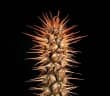
Euphorbia didiereoides
Euphorbia didiereoides
Safety & Hazards
Although we have seen no specific information for this plant, the latex in most, if not all Euphorbias is caustic and toxic - skin contact often causing irritation and blistering; contact with the eyes causing temporary or even permanent blindness; whilst ingestion can cause purging or more severe problems[PFAF].
Cultivation Details
A plant of the lowland, drier tropics, where it can be found at elevations up to 700 metres[1]. A copious latex is produced in all parts of the plant[2].
Propagation
Seed - Stem cuttings. They should be at least 20cm long and, after being taken they should be allowed to lie in a shaded place for at least a week prior to planting in order to develop a callus on the cut end[2]. Cite as: Tropical Plants Database, Ken Fern. tropical.theferns.info. 2026-02-20. <tropical.theferns.info/viewtropical.php?id=Euphorbia+didiereoides>
Pollinators
Data unavailable
References
- [1]Desert Tropicals — http://www.desert-tropicals.com/ ↩︎The main focus of the site is succulent plants, but it also contains information on a wide range of other species. Usually at least one good photograph, plus basic information about the plant and its cultivation.
- [2]Protabase - Plant Resources of Tropical Africa. — http://www.prota.org ↩︎An excellent on-line database with detailed information on over 3,200 species of useful plants of Africa.
- [3]IUCN Red List of Threatened Species — http://www.iucnredlist.org/ ↩︎A list of plants under threat and facing possible extinction, usually with brief details of the threats and information on habitat.
- [PFAF]Plants for a Future — pfaf.org ↩︎