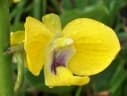
Eulophia speciosa
Eulophia speciosa
Safety & Hazards
None known
Cultivation Details
Succeeds in full sun or in light shade[1]. Usually found in sandy soils in the wild, though it is also recorded in clays and can also grow in brackish soils[1, 2]. Plants must be kept fairly dry during the dormant season[1].
Propagation
Seed - propagation from seeds in possible, but since orchid seed germination can usually only take place on the surface of a sterile medium in flasks, this form of propagation requires considerable expertise and preferably access to a modern propagation lab. The development of the protocorms ('seedlings') is very slow in Eulophia and takes about 6 - 12 months[1]. Plants flower about 2 - 4 years after sowing[1]. Division of the bulbs during the dormant season[1]. Since the plants are to some degree dependent on their mycorrhiza, the substrate should also contain a small quantity of the soil the plants were growing in before[1]. Cite as: Tropical Plants Database, Ken Fern. tropical.theferns.info. 2026-02-20. <tropical.theferns.info/viewtropical.php?id=Eulophia+speciosa>
Pollinators
Bees
References
- [1]PlantZAfrica.com — http://www.plantzafrica.com ↩︎An excellent site giving detailed descriptions and uses of many S. African plants.
- [2]Flora Zambesiaca — http://apps.kew.org/efloras/fz/intro.html ↩︎An excellent online flora of plants from the Zambezi River basin. It lists a number of the plant uses as well as the habitats and botanical descriptions of the plants.
- [3]Gemsbok Bean and Kalahari Truffle — Leffers A. · Gamsberg MacMillan; Namibia. · 2003 · ISBN 99916-0-491-X ↩︎Details of the traditional uses of over 200 species of plants in northeastern Namibia. Written for the non-expert, there is usually at least one photograph with each plant entry.