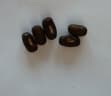
Erythrina crista-galli
Erythrina crista-galli
Safety & Hazards
All Erythrina species contain greater or lesser amounts of toxic alkaloids - these can be found in all parts of the plant but are usually most concentrated in the seeds. Concentrations vary from species to species, in some it is low enough that the plant is safely used as a food. In many, the alkaloids are utilized for their medicinal effects. We have no specific information on the concentration of the alkaloids in this species, but care should be exercised in any use of the plant that involves ingestion. These alkaloids have a curare-like action (obtained from Strychnos species) and can cause paralysis and even death by respiratory failure[1, PFAF].
Cultivation Details
Erythrina crista-galli is not very cold tolerant and grows best in subtropical climates. In areas with colder winters, the rootstock can tolerate occasional temperatures down to about -10°c provided the stem bases are thickly mulched with organic matter such as leaf litter or sawdust and covered with bracken[2]. The top growth will be killed by the frost but new growth should sprout from the rootstock in spring and this will flower in late summer[2]. In more tropical climates the plant grows better at higher elevations[3]. Erythrina species are tolerant of a range of soils, often tolerating poor fertility, but generally grow best in a sunny position in a moderately fertile, well-drained soil[2]. This species is found in the wild in very moist and marshy soils, though it also succeeds in dry soils[4]. A form called 'Compacta' is said to flower more freely than the type[5]. Young plants grow away moderately well, reaching a height of 2.5 metres within 2 years[4]. Plants take 3 - 4 years to flower from seed[2]. Plants are difficult to establish, taking some years to flower[6]. The various species of Erythrina can all, as far as is known, be intercrossed to produce fertile hybrids[7]. This species is the national tree of Argentina and Uruguay, and also the city tree of Los Angeles[8, 4]. This species has a symbiotic relationship with certain soil bacteria, these bacteria form nodules on the roots and fix atmospheric nitrogen. Some of this nitrogen is utilized by the growing plant but some can also be used by other plants growing nearby[9].
Propagation
Seed - pre-soak for 12 hours in warm water and sow spring in a greenhouse. When they are large enough to handle, prick the seedlings out into individual pots and grow them on in the greenhouse for at least their first winter. Plant them out into their permanent positions in late spring or early summer, after the last expected frosts. Cuttings of half-ripe wood, mid summer in a frame[2]. Overwinter in a greenhouse and plant out in late spring or early summer. Heeled cuttings of young growth in the spring in a frame[2]. Overwinter in a greenhouse and plant out in late spring or early summer. Cite as: Temperate Plants Database, Ken Fern. temperate.theferns.info. 2026-02-21. <temperate.theferns.info/plant/Erythrina+crista-galli>
Pollinators
Birds, Insects
References
- [1]The Leguminosae; A Source Book of Characteristics, Uses and Nodulation — Allen O.N.; Allen E.K. · University of Wisconsin · 1981 · ISBN 0-333-32221-5 ↩︎An amazing and comprehensive work, giving a brief guide to the many genera of the family Fabaceae and also the principle uses of the genus.
- [2]The New RHS Dictionary of Gardening. 1992. — Huxley. A. · MacMillan Press · 1992 · ISBN 0-333-47494-5 ↩︎Excellent and very comprehensive, though it contains a number of silly mistakes. Readable yet also very detailed.
- [3]Tropical and Subtropical Trees - A Worldwide Encyclopaedic Guide. — Barwick. M. · Thames & Hudson, London · 2004 · ISBN 0-500-51181-0 ↩︎A superb book, very concise and well written, giving a wealth of information on 400 or more species including descriptions, habitat, cultivation details and plant uses. A wealth of colour photographs bring each plant vividly to life.
- [4]Brazilian Trees. Volume 1. 4th Edition. — Lorenzi. H. · Instituto Plantarum De Estudos Da Flora; Brazil. · 2002 · ISBN 85-86714-17-8 ↩︎Information on 350 species of Brazilian trees. Stunning photographs of each species, brief details on the plant, its uses and how to grow it from seed. A superb work, with the minor irritation that the translation from Portuguese is not of the best.
- [5]Perennial Garden Plants — Thomas. G. S. · J. M. Dent & Sons, London. · 1990 · ISBN 0 460 86048 8 ↩︎A concise guide to a wide range of perennials. Lots of cultivation guides, very little on plant uses.
- [6]Climbers and Wall Shrubs. — Davis. B. · Viking. · 1990 · ISBN 0-670-82929-3 ↩︎Contains information on 2,000 species and cultivars, giving details of cultivation requirements. The text is terse but informative.
- [7]Plant Resources of Southeast Asia — http://proseanet.org/ ↩︎Lots of information on the uses of the plants of SE Asia.
- [8]Flowers of India — http://www.flowersofindia.net/ ↩︎A wed site of native Indian plants, plus cultivated and naturalized species. It has good quality photos and terse details on more than 3,000 species and cultivars.
- [9]Nodulation Plants in GRIN Taxonomy — United States Department of Agriculture · http://www.ars-grin.gov/~sbmljw/cgi-bin/taxnodul.pl?language=en ↩︎An online database listing plants that have either positive or negative reports on root and stem nodulation with nitrogen-fixing bacteria.
- [10]Tropical Ornamentals; A Guide — Whistler. W. Arthur. · Timber Press Inc. Oregon. · 2000 · ISBN 0-88192-448-2 ↩︎An excellent little guide to some of the more commonly cultivated ornamental plants of the Tropics, often giving some information on the plants other uses.
- [11]Medicinal Plants of Brazil — Mors W.B.; Rizzini C.T.; Pereira N.A. · Reference Publications; Michigan. · 2000 · ISBN 0-917256-42-5 ↩︎An extremely concise book, listing approximately 1,500 species and varieties of plants with their botanical name, common name in Brazil, regions in Brazil where the plant is found, a brief list of uses and any medically active compounds in the plant.
- [PFAF]Plants for a Future — pfaf.org ↩︎