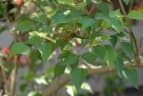
Erythrina corallodendron
Erythrina corallodendron
Safety & Hazards
All Erythrina species contain greater or lesser amounts of toxic alkaloids - these can be found in all parts of the plant but are usually most concentrated in the seeds. Concentrations vary from species to species, in some it is low enough that the plant is safely used as a food. In many, the alkaloids are utilized for their medicinal effects. We have no specific information on the concentration of the alkaloids in this species, but care should be exercised in any use of the plant that involves ingestion. These alkaloids have a curare-like action (obtained from Strychnos species) and can cause paralysis and even death by respiratory failure[1, PFAF].
Cultivation Details
A plant of the lowland tropics. Succeeds in a moderately fertile, well-drained soil[2]. Plants commence flowering when 3 - 4 years old[2]. All species in this genus are believed to be self-compatible. Their flowers are adapted to pollination by birds, though various insects can also cause fertilization. The various species of Erythrina can all, as far as is known, be intercrossed to produce fertile hybrids. Those species most closely related to each other cross fairly readily, but even species that are quite distant can hybridize[3, 4]. This species has a symbiotic relationship with certain soil bacteria, these bacteria form nodules on the roots and fix atmospheric nitrogen. Some of this nitrogen is utilized by the growing plant but some can also be used by other plants growing nearby[5].
Propagation
Fresh seeds, and those harvested within 3 - 6 months of maturity, can be sown without any special treatment. Germination rates are generally high and are often 100%. Seeds over 6 months old may take between 12 - 18 months to germinate due to their hard seed coat which becomes tougher with age. Soaking them in hot water, or abrading their seedcoat, can reduce this time considerably. They may be added to water which has just fallen below boiling point and left in the water as it cools for a minimum of one hour, but up to 12 hours for seed 3 years or more old, and then sown in the usual way. Alternatively, file the seeds with a slender triangular file. A groove can be made through the sides of the seed coat with care so as to avoid damaging the cotyledons or embryo, which usually results in the death of the seeds from fungal attack or in malformed and weakened seedlings[6]. Seeds of most species produce strong seedlings from healthy seeds in almost any well-drained soil, with a minimum of trouble from damping-off disease[6]. Cuttings of half-ripe wood[2]. Heeled cuttings of young growth[2]. Cite as: Tropical Plants Database, Ken Fern. tropical.theferns.info. 2026-02-20. <tropical.theferns.info/viewtropical.php?id=Erythrina+corallodendron>
Pollinators
Birds, Insects
References
- [1]The Leguminosae; A Source Book of Characteristics, Uses and Nodulation — Allen O.N.; Allen E.K. · University of Wisconsin · 1981 · ISBN 0-333-32221-5 ↩︎An amazing and comprehensive work, giving a brief guide to the many genera of the family Fabaceae and also the principle uses of the genus.
- [2]The New RHS Dictionary of Gardening. 1992. — Huxley. A. · MacMillan Press · 1992 · ISBN 0-333-47494-5 ↩︎Excellent and very comprehensive, though it contains a number of silly mistakes. Readable yet also very detailed.
- [3]Plant Resources of Southeast Asia — http://proseanet.org/ ↩︎Lots of information on the uses of the plants of SE Asia.
- [4]Annals of the Missouri Botanical Garden. Vol 75 — Missouri Botanical Garden: Boston. · 1988 · http://www.biodiversitylibrary.org ↩︎Contains, amongst other things, an article on the flora of Tanzania, a treatment of the genus Xyris and one for the Panamanian Boraginaceae. It can be downloaded from the internet.
- [5]Nodulation Plants in GRIN Taxonomy — United States Department of Agriculture · http://www.ars-grin.gov/~sbmljw/cgi-bin/taxnodul.pl?language=en ↩︎An online database listing plants that have either positive or negative reports on root and stem nodulation with nitrogen-fixing bacteria.
- [6]Annals of the Missouri Botanical Garden. Vol. 66 — Missouri Botanical Garden Press; Missouri. · 1979 · http://www.biodiversitylibrary.org ↩︎Contains an article on propagating Erythrina spp. It can be downloaded from the Internet.
- [7]Flowering Plants of Jamaica — Adams. C.D. · University of the West Indies; Jamaica. · 1972 ↩︎A terse treatment of the flowering plants of Jamaica, with a botanical description of each plant, notes on habitat etc.
- [8]Mansfeld's Database of Agricultural and Horticultural Plants — http://mansfeld.ipk-gatersleben.de/pls/htmldb_pgrc/f?p=185:3:4292127278597336 ↩︎Terse details of a huge range of useful plants.
- [9]Medicinal Plants of Brazil — Mors W.B.; Rizzini C.T.; Pereira N.A. · Reference Publications; Michigan. · 2000 · ISBN 0-917256-42-5 ↩︎An extremely concise book, listing approximately 1,500 species and varieties of plants with their botanical name, common name in Brazil, regions in Brazil where the plant is found, a brief list of uses and any medically active compounds in the plant.
- [10]Dictionary of Economic Plants. — Uphof. J. C. Th. · Weinheim · 1959 · ISBN - ↩︎An excellent and very comprehensive guide but it only gives very short descriptions of the uses without any details of how to utilize the plants. Not for the casual reader.
- [11]Green Manures and Manuring in the Tropics — Sornay P. De. Translated by Flattely F.W. · John Bale, Sons and Danielsson Ltd.: London · 1916 · http://www.biodiversitylibrary.org ↩︎An excellent work on the subject, even if it was written almost 100 years ago. It also includes a section of useful Legumes. Can be downloaded from the Internet.
- [12]Medicinal Plants of the Guianas — DeFilipps, R. A.; Maina, S. L.; & Crepin, J. · Smithsonian Museum · http://botany.si.edu/bdg/medicinal/index.html ↩︎A down-loadable PDF document of a book in pre-publication awaiting illustration. An excellent, if rather terse, guide to the traditional medicinal uses of the plants of the region
- [PFAF]Plants for a Future — pfaf.org ↩︎