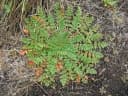
Erodium cicutarium
Erodium cicutarium
Safety & Hazards
None known
Cultivation Details
Erodium cicutarium is native mainly to the temperate zone, ranging as far north as Norway. It can also be found in subtropical areas and has spread as a weed into the tropics, mainly at higher elevations. Prefers a sunny well-drained position and a limy soil or at least one that is not acid[1]. Plants are likely to be resistant to maritime exposure[PFAF]. The plant can invade disturbed areas and, once established, can form dense stands that eliminate native vegetation and can successfully compete with natve grasses and herbs[2].
Propagation
Seed - sow in situ as soon as the seed is ripe in the late summer. The seed can also be sown in situ in late spring[1]. Germination usually takes place within 3 weeks[3]. Cite as: Temperate Plants Database, Ken Fern. temperate.theferns.info. 2026-02-21. <temperate.theferns.info/plant/Erodium+cicutarium>
Pollinators
Bees, Beetles, Lepidoptera, Self
References
- [1]RHS Dictionary of Plants plus Supplement. 1956 — F. Chittendon. · Oxford University Press · 1951 · ISBN - ↩︎Comprehensive listing of species and how to grow them. Somewhat outdated, it has been replaced in 1992 by a new dictionary (see [ 200 ]).
- [2]Invasive lant Species of the World; a reference guide to envoronmental weeds. — Weber E. · Biddles Ltd., King's Lynn, UK · 2005 · ISBN 0-85199-695-7 ↩︎Contains information on the habit and growth patterns of 450 recognised invasive species of plant.
- [3]The New RHS Dictionary of Gardening. 1992. — Huxley. A. · MacMillan Press · 1992 · ISBN 0-333-47494-5 ↩︎Excellent and very comprehensive, though it contains a number of silly mistakes. Readable yet also very detailed.
- [4]Flora of China — Missouri Botanical Garden Press; St. Louis. · 1994 · http://flora.huh.harvard.edu/china/ ↩︎An excellent, comprehensive resource in 25 volumes. In addition to the botanical information the flora also gives basic information on habitat and some uses. An on-line version is also available.
- [5]Edible and Medicinal Plants. — Launert. E. · Hamlyn · 1981 · ISBN 0-600-37216-2 ↩︎Covers plants in Europe. a drawing of each plant, quite a bit of interesting information.
- [6]Sturtevant's Edible Plants of the World. — Hedrick. U. P. · Dover Publications · 1972 · ISBN 0-486-20459-6 ↩︎Lots of entries, quite a lot of information in most entries and references.
- [7]A Field Guide to N. American Edible Wild Plants. — Elias. T. and Dykeman. P. · Van Nostrand Reinhold · 1982 · ISBN 0442222009 ↩︎Very readable.
- [8]A Field Guide to the Common and Interesting Plants of Baja California. — Coyle. J. and Roberts. N. C. · Natural History Publishing Co. · 1975 · ISBN - ↩︎A very readable pocket flora with good illustrations, it gives quite a few plant uses.
- [9]Edible Native Plants of the Rocky Mountains. — Harrington. H. D. · University of New Mexico Press · 1967 · ISBN 0-8623-0343-9 ↩︎A superb book. Very readable, it gives the results of the authors experiments with native edible plants.
- [10]Cornucopia - A Source Book of Edible Plants. — Facciola. S. · Kampong Publications · 1990 · ISBN 0-9628087-0-9 ↩︎Excellent. Contains a very wide range of conventional and unconventional food plants (including tropical) and where they can be obtained (mainly N. American nurseries but also research institutes and a lot of other nurseries from around the world.
- [11]Native American Ethnobotany — Moerman. D. · Timber Press. Oregon. · 1998 · ISBN 0-88192-453-9 ↩︎Very comprehensive but terse guide to the native uses of plants. Excellent bibliography, fully referenced to each plant, giving a pathway to further information. Not for the casual reader.
- [12]The History and Folklore of North American Wild Flowers. — Coffey. T. · Facts on File. · 1993 · ISBN 0-8160-2624-6 ↩︎A nice read, lots of information on plant uses.
- [13]A Field Guide to Medicinal Plants. Eastern and Central N. America. — Foster. S. & Duke. J. A. · Houghton Mifflin Co. · 1990 · ISBN 0395467225 ↩︎A concise book dealing with almost 500 species. A line drawing of each plant is included plus colour photographs of about 100 species. Very good as a field guide, it only gives brief details about the plants medicinal properties.
- [14]Nature's Colors - Dyes from Plants. — Grae. I. · MacMillan Publishing Co. New York. · 1974 · ISBN 0-02-544950-8 ↩︎A very good and readable book on dyeing.
- [15]Dictionary of Economic Plants. — Uphof. J. C. Th. · Weinheim · 1959 · ISBN - ↩︎An excellent and very comprehensive guide but it only gives very short descriptions of the uses without any details of how to utilize the plants. Not for the casual reader.
- [16]A Dictionary of Plants Used by Man. — Usher. G. · Constable · 1974 · ISBN 0094579202 ↩︎Forget the sexist title, this is one of the best books on the subject. Lists a very extensive range of useful plants from around the world with very brief details of the uses. Not for the casual reader.
- [PFAF]Plants for a Future — pfaf.org ↩︎