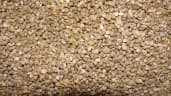
Echinochloa frumentacea
Echinochloa frumentacea
Safety & Hazards
None known
Cultivation Details
Echinochloa frumentacea is an annual plant that can succeed in a wide range of environments from the temperate zone to the tropics. It can be found at elevations up to 1,500 metres. It grows best in areas where annual daytime temperatures are within the range 25 - 30°c, but can tolerate 10 - 35°c[1]. It prefers a mean annual rainfall in the range 500 - 750mm, but tolerates 450 - 1,000mm[1]. Requires a sunny position[1]. Prefers a rich moist soil[2] but succeeds in ordinary garden soil[3]. Plants can succeed in soils with a pH as low as 4.5[4]. Prefers a pH in the range 5.5 - 6.5, tolerating 4.8 - 7.2[1]. This is the fastest growing of the millets, it can produce a crop of seeds within 6 weeks of sowing in the tropics, subtropics and areas of the temperate zone with hot summers[5, 6, 1]. Obtaining a reasonable crop in cool-summer areas, however, is more problematic. The plants need to be started off early in a greenhouse in order to give sufficient growing time, planting them out after the last expected frosts. There are some named varieties[3, 7, 8, 9].
Propagation
Seed - sow early spring in a greenhouse and only just cover the seed. When they are large enough to handle, prick the seedlings out into individual pots and plant them out into their permanent positions in early summer. A sowing in situ in late spring might also succeed but is unlikely to ripen a crop of seed if the summer is cool and wet. Cite as: Temperate Plants Database, Ken Fern. temperate.theferns.info. 2026-02-21. <temperate.theferns.info/plant/Echinochloa+frumentacea>
Pollinators
Wind
References
- [1]Ecocrop — http://ecocrop.fao.org/ecocrop/srv/en/home ↩︎Basic information on a wide range of useful plants, plus details of environmental needs where available.
- [2]Edible Native Plants of the Rocky Mountains. — Harrington. H. D. · University of New Mexico Press · 1967 · ISBN 0-8623-0343-9 ↩︎A superb book. Very readable, it gives the results of the authors experiments with native edible plants.
- [3]RHS Dictionary of Plants plus Supplement. 1956 — F. Chittendon. · Oxford University Press · 1951 · ISBN - ↩︎Comprehensive listing of species and how to grow them. Somewhat outdated, it has been replaced in 1992 by a new dictionary (see [ 200 ]).
- [4]Plants Database — United States Department of Agriculture · http://plants.usda.gov/java/factSheet ↩︎An online database with an excellent collection of fact sheets about native N. American plants.
- [5]Famine Foods listed in the Chiu-Huang Pen-ts'ao. — Reid. B. E. · Southern Materials Centre; Taipei · 1977 · ISBN - ↩︎A translation of an ancient Chinese book on edible wild foods. Fascinating.
- [6]Cornucopia - A Source Book of Edible Plants. — Facciola. S. · Kampong Publications · 1990 · ISBN 0-9628087-0-9 ↩︎Excellent. Contains a very wide range of conventional and unconventional food plants (including tropical) and where they can be obtained (mainly N. American nurseries but also research institutes and a lot of other nurseries from around the world.
- [7]A Dictionary of Plants Used by Man. — Usher. G. · Constable · 1974 · ISBN 0094579202 ↩︎Forget the sexist title, this is one of the best books on the subject. Lists a very extensive range of useful plants from around the world with very brief details of the uses. Not for the casual reader.
- [8]Flora of the USSR. — Komarov. V. L. · Israel Program for Scientific Translation · 1968 · http://www.biodiversitylibrary.org · ISBN - ↩︎An immense (25 or more large volumes) and not yet completed translation of the Russian flora. Full of information on plant uses and habitats but heavy going for casual readers. It can be downloaded from the Internet.
- [9]Economic Botany. — Hill. A. F. · The Maple Press · 1952 · ISBN - ↩︎Not very comprehensive, but it is quite readable and goes into some detail about the plants it does cover.
- [10]Plants for Man. — Schery. R. W. ↩︎Fairly readable but not very comprehensive. Deals with plants from around the world.
- [11]Tanaka's Cyclopedia of Edible Plants of the World. — Tanaka. T. & Nakao S. · Keigaku Publishing; Tokyo · 1976 · ISBN - ↩︎The most comprehensive list of edible plants I've come across. Only the briefest entry for each species, though, and some of the entries are more than a little dubious. Not for the casual reader.
- [12]Plants Consumed by Man. — Brouk. B. · Academic Press · 1975 · ISBN 0-12-136450-x ↩︎Readable but not very comprehensive.
- [13]Glossary of Indian Medicinal Plants (Including the Supplement). — Chopra. R. N., Nayar. S. L. and Chopra. I. C. · Council of Scientific and Industrial Research, New Delhi. · 1986 · ISBN - ↩︎Very terse details of medicinal uses of plants with a wide range of references and details of research into the plants chemistry. Not for the casual reader.