Malvaceae FAMILY Vulnerable
Durio ceylanicus
Durio ceylanicus
Edibility
0/5
Medicinal
0/5
Safety & Hazards
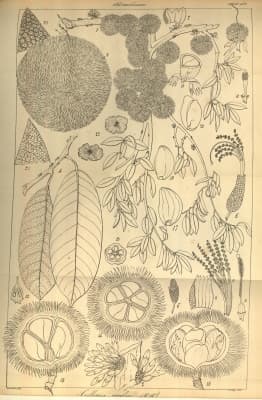
The large, globose fruit has numerous sharp prickles and, when it falls to the ground, can be rather troublesome for people walking barefoot through the forest[1].
Cultivation Details
HabitEvergreen Tree
Growth—
A plant of the lowland, moist tropics. This species closely resembles the durian (Durio zibethinus) in both foliage and structure of the fruit. The fruit of this species, however, is lacking the distinctive smell of the durian and is inedible[2].
Propagation
Seed - Cite as: Tropical Plants Database, Ken Fern. tropical.theferns.info. 2026-02-20. <tropical.theferns.info/viewtropical.php?id=Durio+ceylanicus>
Pollinators
Data unavailable
References
- [1]A Manual of Indian Timbers. — Gamble. J. S. · Bishen Singh Mahendra Pal Singh · 1972 · ISBN - ↩︎First written in the 19th century, but still a classic, giving a lot of information on the uses and habitats of Indian trees. Not for the casual reader.
- [2]A Handbook to the Flora of Ceylon — Trimen H.; continued by Hooker J.D. · Dulau and Co; London. · 1898 · http://www.biodiversitylibrary.org ↩︎Very dated, but still a useful work. It can be downloaded from the Internet.
- [3]IUCN Red List of Threatened Species — http://www.iucnredlist.org/ ↩︎A list of plants under threat and facing possible extinction, usually with brief details of the threats and information on habitat.
- [4]A Guide on Horticulture. — Sundararaj, J.S. Et al · K. Perisami, Coimbatore, India · 1970 ↩︎Page 243 contains an item about grafting durians on to Cullenia rootstocks.
- [5]Dictionary of Economic Plants. — Uphof. J. C. Th. · Weinheim · 1959 · ISBN - ↩︎An excellent and very comprehensive guide but it only gives very short descriptions of the uses without any details of how to utilize the plants. Not for the casual reader.
- [6]Tropical Timbers of the World. Ag. Handbook No. 607. — Chudnoff. Martin. · USDA Forest Service. Wisconsin. · 1984 ↩︎Terse details on the properties of the wood of almost 400 species of trees from the Tropics.