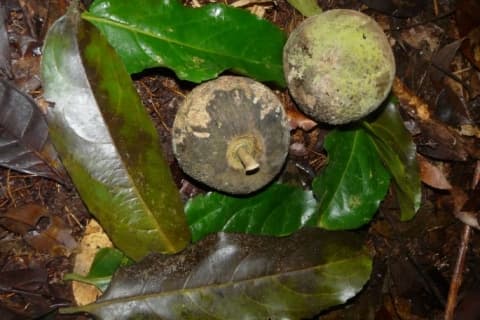
Cultivation Details
HabitTree
Growth—
Any part of the tree when cut or bruised emits a pungent smell resembling that of horse-radish and methyl salicylate[2]. The pungent smell and medicinal uses of the stem bark are similar to those of the roots of Pentadiplandra brazzeana, and the two species are often used indiscriminately[1]. A dioecious species, both male and female forms need to be grown if fruit and seed are required[1].
Propagation
Seed - Cite as: Tropical Plants Database, Ken Fern. tropical.theferns.info. 2026-02-20. <tropical.theferns.info/viewtropical.php?id=Drypetes+gossweileri>
Pollinators
Data unavailable
References
- [1]Protabase - Plant Resources of Tropical Africa. — http://www.prota.org ↩︎An excellent on-line database with detailed information on over 3,200 species of useful plants of Africa.
- [2]The Useful Plants of West Tropical Africa. — Burkil. H. M. · Royal Botanic Gardens; Kew. · 1985 - 2004 ↩︎Brief descriptions and details of the uses of over 4,000 plants. A superb, if terse, resource, it is also available electronically on the Web - see http://www.aluka.org/