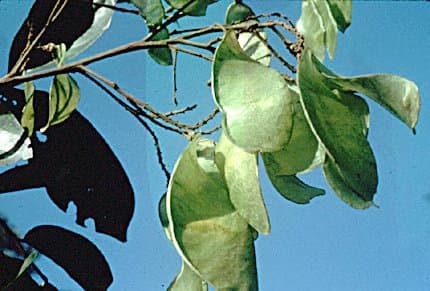
Diplotropis purpurea
Diplotropis purpurea
Safety & Hazards
None known
Cultivation Details
Succeeds in full sun to dappled shade[1]. Prefers a well-drained soil[1]. Established plants are drought tolerant[1]. Newly planted young trees usually grow away moderately quickly[1]. This species has a symbiotic relationship with certain soil bacteria; these bacteria form nodules on the roots and fix atmospheric nitrogen. Some of this nitrogen is utilized by the growing plant but some can also be used by other plants growing nearby[2].
Propagation
Seed - best sown as soon as it is ripe in a lightly shaded position in a nursery seedbed[1]. Germination rates are usually high, with the seed sprouting within 14 - 21 days[1]. Prick out the seedlings into individual containers when they are 4 - 5cm tall and they should be ready to plant out 5 - 6 months later[1]. Cite as: Tropical Plants Database, Ken Fern. tropical.theferns.info. 2026-02-20. <tropical.theferns.info/viewtropical.php?id=Diplotropis+purpurea>
Pollinators
Data unavailable
References
- [1]Brazilian Trees. Volume 2. 4th Edition. — Lorenzi. H. · Instituto Plantarum De Estudos Da Flora; Brazil. · 2002 · ISBN 85-86714-15-1 ↩︎Information on 350 species of Brazilian trees. Stunning photographs of each species, brief details on the plant, its uses and how to grow it from seed. A superb work, with the minor irritation that the translation from Portuguese is not of the best.
- [2]Nodulation Plants in GRIN Taxonomy — United States Department of Agriculture · http://www.ars-grin.gov/~sbmljw/cgi-bin/taxnodul.pl?language=en ↩︎An online database listing plants that have either positive or negative reports on root and stem nodulation with nitrogen-fixing bacteria.
- [3]Present and Potential Commercial Timbers of the Caribbean — Longwood.F.R. · USDA Forest Service; Washington, DC. · 1962 ↩︎Quite detailed information on more than 60 species of Caribbean timber trees, giving species descriptions, habitat, detailed info on the wood and some info on other uses. Available for download on the internet.
- [4]Medicinal Plants of the Guianas — DeFilipps, R. A.; Maina, S. L.; & Crepin, J. · Smithsonian Museum · http://botany.si.edu/bdg/medicinal/index.html ↩︎A down-loadable PDF document of a book in pre-publication awaiting illustration. An excellent, if rather terse, guide to the traditional medicinal uses of the plants of the region