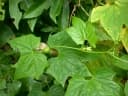
Cucurbitaceae FAMILY
Diplocyclos palmatus
Diplocyclos palmatus
Edibility
1/5
Medicinal
2/5
Safety & Hazards
The dried leaves have caused deaths in calves and ewes[1]. All parts of the plant are extremely poisonous[2]. Several children are said to have died after eating the fruit[2]. There are conflicting reports on the toxicity of this plant, with it being considered poisonous in Australia, whilst the leaves are eaten in several other countries[3].
References
- [1]Protabase - Plant Resources of Tropical Africa. — http://www.prota.org ↩︎An excellent on-line database with detailed information on over 3,200 species of useful plants of Africa.
- [2]Brisbane Rainforest Action and Information Network, — http://www.brisrain.webcentral.com.au ↩︎Information on plants in the Queensland Rainforests.
- [3]Food Plants of Papua New Guinea — French. B.R. · Author. · 2006 ↩︎Published on-line in PDF format, this book contains information on several hundred New Guinea food plants.
- [4]African Flowering Plants Database — Conservatoire et Jardin Botaniques. · http://www.ville-ge.ch/musinfo/bd/cjb/africa/recherche.php ↩︎Contains information on over 150,000 plant names (including synonyms) giving a description and habitat, plus a distribution map.