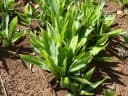
Dichapetalum cymosum
Dichapetalum cymosum
Safety & Hazards
The leaves and seeds contain alkaloids and are extremely poisonous to cattle[1, 2]. This plant is a common cause of cattle poisoning on the Kalahari Sands of southern Africa - at one time the poisonous principle was thought to be a cyanogenetic glucocide but it has now been proved to be fluoracetic acid[3]. Handling the very young leaf is said to cause a tingling and burning sensation of the skin, an effect not found with the old leaf. Whether this is related to the reported presence of monofluoroacetate in this and other Dichapetalum species is not clear[4].
Cultivation Details
Not known
Propagation
Seed - Cite as: Tropical Plants Database, Ken Fern. tropical.theferns.info. 2026-02-20. <tropical.theferns.info/viewtropical.php?id=Dichapetalum+cymosum>
Pollinators
Data unavailable
References
- [1]Flora Zambesiaca — http://apps.kew.org/efloras/fz/intro.html ↩︎An excellent online flora of plants from the Zambezi River basin. It lists a number of the plant uses as well as the habitats and botanical descriptions of the plants.
- [2]African Flowering Plants Database — Conservatoire et Jardin Botaniques. · http://www.ville-ge.ch/musinfo/bd/cjb/africa/recherche.php ↩︎Contains information on over 150,000 plant names (including synonyms) giving a description and habitat, plus a distribution map.
- [3]Annals of the Missouri Botanical Gardens Vol. 52 — Missouro Botanical Garden · 1965 ↩︎An excellent botanical publication, available for download from the Internet. Amongst other things, this issue contains parts of the Flora of Panama.
- [4]BoDD (Botanical Dermatology Database) — http://bodd.cf.ac.uk/ ↩︎Brief notes on a very wide range of plants that have reports of causing harm to the skin.
- [5]Gemsbok Bean and Kalahari Truffle — Leffers A. · Gamsberg MacMillan; Namibia. · 2003 · ISBN 99916-0-491-X ↩︎Details of the traditional uses of over 200 species of plants in northeastern Namibia. Written for the non-expert, there is usually at least one photograph with each plant entry.