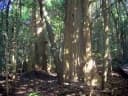
Urticaceae FAMILY
Dendrocnide excelsa
Dendrocnide excelsa
Edibility
1/5
Medicinal
0/5
Safety & Hazards
The trees, especially the young leaves, have stinging hairs. The sting can be intensely painful and the pain can recur, with reducing intensity, over a period of several months - especially if the affected area gets wet[1, 2]. This species probably gives a stronger, more intense sting than other members of the genus[1].
Cultivation Details
HabitEvergreen Tree
GrowthFast
A plant mainly of the subtropical rainforests, just extending into the tropics. Plants in this genus are essentially lowland primary forest species preferring slightly moist and somewhat shady habitats[3]. A fast-growing species[2]. A dioecious species, both male and female forms need to be grown if fruit and seed are required[4].
References
- [1]Wild Food in Australia. — Cribb. A. B. and J. W. · Fontana · 1976 · ISBN 0-00-634436-4 ↩︎A very good pocket guide.
- [2]Australian Rainforest Plants Volumes 1 - 6 — Nicholson N. & H. · Terania Rainforest Publishing; New South Wales. · 2007 · ISBN 9-78095894-3628 ↩︎Beautiful set of booklets with a terse description of over 600 species and their habitat, often including some of their uses and notes on their cultivation, plus at least one, excellent photograph.
- [3]Plant Resources of Southeast Asia — http://proseanet.org/ ↩︎Lots of information on the uses of the plants of SE Asia.
- [4]The Gardens' Bulletin Vol. 25 — Botanic Gardens; Singapore · 1969 · http://www.biodiversitylibrary.org/Default.aspx ↩︎A botanical journal - this issue includes a treatment of the genera Dendrocnide and Laportea. It can be downloaded from the Internet.
- [5]Flora of Australia — http://www.anbg.gov.au/abrs/abif/flora/ ↩︎The full information from the Flora of Australia - on-line. An excellent resource.
- [6]Useful Wild Plants in Australia. — Cribb. A. B. and J. W. · William Collins Pty Ltd. Sidney · 1981 · ISBN 0-00-216441-8 ↩︎A very readable book.