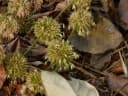
Dendrocalamus strictus
Dendrocalamus strictus
Safety & Hazards
None known
Cultivation Details
Succeeds in tropical and subtropical areas. The plant is widely adaptable to temperatures, tolerating occasional frosts with temperatures as low as -5°c and summer heat as high as 45°c[1]. It occurs naturally in tracts receiving as low as 750 mm of rainfall a year, but can also tolerate as much as 4,000mm[1]. Succeeds in full sun and in light shade[2]. Prefers well-drained, poor, coarse, grained and stony soils[1]. Succeeds on practically all types of soils provided there is good drainage[1]. It does not grow on water-logged or heavy soils such as pure clay or a mixture of clay and lime[1]. Well-drained localities with sandy loam are the best for bamboo growth[1]. Prefers a pH in the range 4.5 - 5.5, tolerating 4 - 6.5[2]. Established plants are drought tolerant[1]. Bamboos have an interesting method of growth. Each plant produces a number of new stems annually - these stems grow to their maximum height in their first year of growth, subsequent growth in the stem being limited to the production of new side branches and leaves. In the case of some mature tropical species the new stem could be as much as 30 metres tall, with daily increases in height of 30cm or more during their peak growth time. This makes them some of the fastest-growing species in the world[PFAF]. The new rhizomes of seedlings first bend downwards before curving upwards to form their aerial shoots - thus successive shoots are not only larger than the preceding ones but also arise from rhizomes that are deeper in the soil. Early shoots are thin, wiry and grass-like, but as the clump develops the new shoots become progressively more woody and larger. A clump is considered mature when it starts producing full-sized culms – in nature this can take 11—13 years, though in cultivation it can be as little as 6 years[3]. A mature clump grows in all directions, provided there are no obstructions (e.g. rocks or hard soil layers) until a balance is reached between the formation of new culms and the dying off of old culms. The ratio of new to old culms in a clump is usually 1:5[3]. Young shoots usually arise in the rainy season. Given sufficient rainfall, as many as 20 new culms may be produced annually from fair-sized clumps[3]. A mature clump contains on average 20 - 40 culms, but up to 200 are possible. Individual culms are considered mature when they are 3 years old but they can live for up to 15 years[3]. Bamboos in general are usually monocarpic, living for many years before flowering, then flowering and seeding profusely for a period of 1 - 3 years before usually dying. With this species, the gregarious flowering cycle varies from 25 - 65 years[310' 361]. This does not mean that all the clumps will flower at the same time. The gregarious flowering commences with intensive sporadic flowering for 2 - 3 years, increasing progressively and resulting in the flowering of all the clumps in a period of five years[1]. Sporadic flowering is seen almost every year[1].
Propagation
Seed - many, if not all, members of this genus have a short viability and should be sown within 2 - 3 months of harvest. Sow in containers in a lightly shaded position and only just cover. Germination usually takes place readily. Prick out into individual pots as soon as the plants are large enough to handle. Plant out into permanent positions when 20cm tall. Plants may remain in their low-growing juvenile state for several years - cutting the culms to the ground level can stimulate taller adult growth[4]. Rhizome, culm and branch cuttings[3]. The propagules are raised in the nursery and after they have produced roots they are planted out in the field before or during the first half of the rainy season[3]. Cite as: Tropical Plants Database, Ken Fern. tropical.theferns.info. 2026-02-20. <tropical.theferns.info/viewtropical.php?id=Dendrocalamus+strictus>
Pollinators
Wind
References
- [1]Bamboos of India: A Compendium — Seethalakshmi K.K., Muktesh Kumar M.S. · Brill. · 2002 · http://www.inbar.int/publication/txt/tr17/default.htm · ISBN 8186247254 ↩︎A very good book giving botanical descriptions of the plants with brief notes on subjects such as uses, habitat and range. It is also available to view on the Internet.
- [2]Ecocrop — http://ecocrop.fao.org/ecocrop/srv/en/home ↩︎Basic information on a wide range of useful plants, plus details of environmental needs where available.
- [3]Plant Resources of Southeast Asia — http://proseanet.org/ ↩︎Lots of information on the uses of the plants of SE Asia.
- [4]The New RHS Dictionary of Gardening. 1992. — Huxley. A. · MacMillan Press · 1992 · ISBN 0-333-47494-5 ↩︎Excellent and very comprehensive, though it contains a number of silly mistakes. Readable yet also very detailed.
- [5]Cornucopia II — Facciola. S. · Kampong Publications, California. · 1998 · ISBN 0-9628087-2-5 ↩︎The second edition of an excellent guide to the edible uses of plants, though it does not give any details of cultivation etc.
- [6]Flora of China — Missouri Botanical Garden Press; St. Louis. · 1994 · http://flora.huh.harvard.edu/china/ ↩︎An excellent, comprehensive resource in 25 volumes. In addition to the botanical information the flora also gives basic information on habitat and some uses. An on-line version is also available.
- [7]Wild edible plants traditionally used by the tribes in the Parambikulam Wildlife Sanctuary, Keala, India — Yesodharan K. & Sujana K.A. · 2007 ↩︎
- [8]Plants and People of Nepal — Manandhar. N. P. · Timber Press. Oregon. · 2002 · ISBN 0-88192-527-6 ↩︎Excellent book, covering over 1,500 species of useful plants from Nepal together with information on the geography and peoples of Nepal. Good descriptions of the plants with terse notes on their uses.
- [PFAF]Plants for a Future — pfaf.org ↩︎