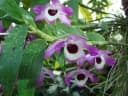
Dendrobium nobile
Dendrobium nobile
Safety & Hazards
None known
Cultivation Details
The plant has a symbiotic relationship with a species of soil-dwelling fungus. It is important that spores of this fungus are present in any soil in which the plant is grown[1]. The plant is extremely tenacious of life - even after being dried, if water is later given it can come back into growth[2].
Propagation
Seed - surface sow, preferably as soon as it is ripe, in the greenhouse and do not allow the compost to dry out. The seed of this species is extremely simple, it has a minute embryo surrounded by a single layer of protective cells. It contains very little food reserves and depends upon a symbiotic relationship with a species of soil-dwelling fungus. The fungal hyphae invade the seed and enter the cells of the embryo. The orchid soon begins to digest the fungal tissue and this acts as a food supply for the plant until it is able to obtain nutrients from decaying material in the soil[1]. It is best to use some of the soil that is growing around established plants in order to introduce the fungus, or to sow the seed around a plant of the same species and allow the seedlings to grow on until they are large enough to move. Cite as: Temperate Plants Database, Ken Fern. temperate.theferns.info. 2026-02-21. <temperate.theferns.info/plant/Dendrobium+nobile>
Pollinators
Data unavailable
References
- [1]The New RHS Dictionary of Gardening. 1992. — Huxley. A. · MacMillan Press · 1992 · ISBN 0-333-47494-5 ↩︎Excellent and very comprehensive, though it contains a number of silly mistakes. Readable yet also very detailed.
- [2]Chinese Materia Medica. — Stuart. Rev. G. A. · Taipei. Southern Materials Centre · 1911 · ISBN - ↩︎A translation of an ancient Chinese herbal. Fascinating.
- [3]Flora of China — Missouri Botanical Garden Press; St. Louis. · 1994 · http://flora.huh.harvard.edu/china/ ↩︎An excellent, comprehensive resource in 25 volumes. In addition to the botanical information the flora also gives basic information on habitat and some uses. An on-line version is also available.
- [4]Plant Resources of Southeast Asia — http://proseanet.org/ ↩︎Lots of information on the uses of the plants of SE Asia.
- [5]Medicinal Plants in Vietnam — Nguyen Van Dan & Doan Thi Nhu · World Health Organisation · 1989 · ISBN 92 9061 101 4 ↩︎An excellent book, giving information on over 200 plants, their medicinal compounds and applications.
- [6]A Barefoot Doctors Manual. — ? · Running Press; Philadelphica. · 1977 · ISBN 0-914294-92-X ↩︎A very readable herbal from China, combining some modern methods with traditional chinese methods.
- [7]CosIng — http://ec.europa.eu/growth/tools-databases/cosing/ ↩︎CosIng is the European Commission database for information on cosmetic substances and ingredients.