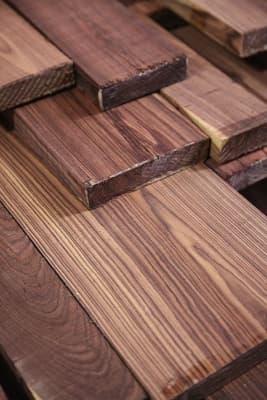
Dalbergia cearensis
Dalbergia cearensis
Safety & Hazards
None known
Cultivation Details
Grows best in a sunny position[1]. Established plants are drought tolerant[1]. Species in this genus are mainly found in the wild growing in sany soils and on limestone escarpments[2]. Plants are fast-growing, but they resent root disturbance and can take a time to settle down when first planted out[1]. This species has a symbiotic relationship with certain soil bacteria, these bacteria form nodules on the roots and fix atmospheric nitrogen. Some of this nitrogen is utilized by the growing plant but some can also be used by other plants growing nearby[].
Propagation
Seed - best sown as soon as it is ripe in a nursery seedbed in a partially shaded position. A germination rate in excess of 50% can be expected, with the seeds sprouting in less than one week[1]. The plant resents root disturbance and so seedlings should be potted up into individual containers as soon as they are large enough to handle. Like many species within the family Fabaceae, once they have been dried for storage the seeds of this species may benefit from scarification before sowing in order to speed up germination. This can usually be done by pouring a small amount of nearly boiling water on the seeds (being careful not to cook them!) and then soaking them for 12 - 24 hours in warm water. By this time they should have imbibed moisture and swollen - if they have not, then carefully make a nick in the seedcoat (being careful not to damage the embryo) and soak for a further 12 hours before sowing[PFAF]. Softwood cuttings of many species, especially if taken from younger plants, will root in a well-drained, sandy medium in a closed case with bottom heat[2]. Cite as: Tropical Plants Database, Ken Fern. tropical.theferns.info. 2026-02-20. <tropical.theferns.info/viewtropical.php?id=Dalbergia+cearensis>
Pollinators
Data unavailable
References
- [1]Brazilian Trees. Volume 3. — Lorenzi. H. · Instituto Plantarum De Estudos Da Flora; Brazil. · 2009 · ISBN 85-86714-34-4 ↩︎Information on 350 species of Brazilian trees. Stunning photographs of each species, brief details on the plant, its uses and how to grow it from seed. A superb work, with the minor irritation that the translation from Portuguese is not of the best.
- [2]The New RHS Dictionary of Gardening. 1992. — Huxley. A. · MacMillan Press · 1992 · ISBN 0-333-47494-5 ↩︎Excellent and very comprehensive, though it contains a number of silly mistakes. Readable yet also very detailed.
- [3]The Hongmu Challenge; A briefing for the 66th meeting of the CITES Standing Committee, January 2016 — Environmental Investigation Agency; London · 2016 · http://www.eia-global.org ↩︎Lists the 33 species used in making Hungmu furniture and the degree of over-exploitation plus recommendations for protecting them.
- [4]Dictionary of Economic Plants. — Uphof. J. C. Th. · Weinheim · 1959 · ISBN - ↩︎An excellent and very comprehensive guide but it only gives very short descriptions of the uses without any details of how to utilize the plants. Not for the casual reader.
- [PFAF]Plants for a Future — pfaf.org ↩︎