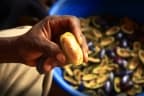
Dacryodes edulis
Dacryodes edulis
Safety & Hazards
None known
Cultivation Details
A plant of the relatively dry tropical savannah, where it is found at elevations up to 1,000 metres. It grows best in areas where annual daytime temperatures are within the range 18 - 28°c, but can tolerate 14 - 35°c[1]. It prefers a mean annual rainfall in the range 1,200 - 3,000mm, but tolerates 1,000 - 5,000mm[1]. The plant can be cultivated in a wide range of areas, since it adapts well to differences in day length, temperature, rainfall, soils and altitude[2]. Seedlings can thrive in quite dense shade, but older trees grow well in partial shade or full sun[1]. Grows in a wide range of soils, even succeeding in leached, infertile ferrallitic soils and swampy soils[3, 2, 1]. Prefers a pH in the range 5 - 6.5, tolerating 4 - 8[1]. Seedling plants can commence fruiting when about 5 - 6 years old[4]. Flowering time and duration depend on latitude and genotype. Some trees flower early, while others flower late and may produce blossoms continuously for several months[2]. Yields of 20 - 50 kilos of fruit can be expected from each tree, with reports of 110 kilos from 20 year old trees[3]. The flowers open in the morning and pollen is shed within 1 - 2 hours, so pollination has to be effected quickly[3]. Trees can be male, female, or hermaphrodite[2]. Male trees may produce a limited number of female flowers, and thus some fruit[2].
Propagation
Seed - it has a short viability, its germination rate drops sharply unless its water content (42% of fresh weight) can be maintained. Unless sown within a week, germination and vigour are greatly reduced[3]. Sow the seed in light shade in a nursery seedbed or in individual containers. Germination starts about 2 weeks after sowing and is epigeal. Early growth is vigorous - the seedlings growing rhythmically, extending by flushes. During a flush, the leaf form changes abruptly from cataphylls (0 - 3 per flush) to normal leaves (with 11 - 19 leaflets). The flush is usually brought to an end by the sudden transition from normal leaves to severely reduced leaves in which only one or two basal pairs of leaflets are extended[3]. Cuttings have proved difficult[3]. Air layering. Up to 80% success has been reported. It takes 4 - 6 months before the layer is ready to remove from the parent, and this should be done when the plant is not in active growth[3]. Cite as: Tropical Plants Database, Ken Fern. tropical.theferns.info. 2026-02-20. <tropical.theferns.info/viewtropical.php?id=Dacryodes+edulis>
Pollinators
Bees, Insects
References
- [1]Ecocrop — http://ecocrop.fao.org/ecocrop/srv/en/home ↩︎Basic information on a wide range of useful plants, plus details of environmental needs where available.
- [2]World Agroforesty Centre — http://www.worldagroforestry.org/ ↩︎An excellent online database of a huge range of trees giving very good information on each plant - its uses, ecology, identity, propagation, pests etc.
- [3]Protabase - Plant Resources of Tropical Africa. — http://www.prota.org ↩︎An excellent on-line database with detailed information on over 3,200 species of useful plants of Africa.
- [4]Perennial Edible Fruits of the Tropics : an Inventory — Martin, F. W.; Campbell, C. W.; Rubertbe, R. M. · U.S. Dept. of Agriculture, Agricultural Research Service · 1987 ↩︎A booklet giving terse details of almost 300 species of edible fruits, plus regional lists of Botanical and Common names for over 2,500 less well-known edible fruits of the tropics.
- [5]Mansfeld's Database of Agricultural and Horticultural Plants — http://mansfeld.ipk-gatersleben.de/pls/htmldb_pgrc/f?p=185:3:4292127278597336 ↩︎Terse details of a huge range of useful plants.
- [6]The Useful Plants of West Tropical Africa. — Burkil. H. M. · Royal Botanic Gardens; Kew. · 1985 - 2004 ↩︎Brief descriptions and details of the uses of over 4,000 plants. A superb, if terse, resource, it is also available electronically on the Web - see http://www.aluka.org/
- [7]Flora Zambesiaca — http://apps.kew.org/efloras/fz/intro.html ↩︎An excellent online flora of plants from the Zambezi River basin. It lists a number of the plant uses as well as the habitats and botanical descriptions of the plants.
- [8]Cornucopia II — Facciola. S. · Kampong Publications, California. · 1998 · ISBN 0-9628087-2-5 ↩︎The second edition of an excellent guide to the edible uses of plants, though it does not give any details of cultivation etc.
- [9]Dictionary of Economic Plants. — Uphof. J. C. Th. · Weinheim · 1959 · ISBN - ↩︎An excellent and very comprehensive guide but it only gives very short descriptions of the uses without any details of how to utilize the plants. Not for the casual reader.