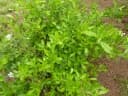
Cyrilla racemiflora
Cyrilla racemiflora
Safety & Hazards
None known
Cultivation Details
Leatherwood has a very wide distribution in the wild, extending southwards from the warm temperate zone of South-eastern North America through the tropical regions of central America and the Caribbean to Brazil. Usually a small, evergreen tree, it can become deciduous in colder winters in the north of its range[1, 2]. It grows to its largest dimensions in the cloud forests of Mexico and Puerto Rico, where the mean annual rainfall can exceed 5,500mm[3]. Requires a sunny position and a humus-rich soil[2]. Thrives in a mixture of peat and loam[1]. Prefers a circum-neutral or slightly acid, moisture-retentive soil[2]. The flowers are produced at the base of the current years growth[1, 2]. In tropical areas the plant can flower and produce fruit all year round[4].
Propagation
Seed - best sown as soon as it is ripe in a greenhouse[2]. As soon as they are large enough to handle, prick out the seedlings into individual pots. Grow them on in the greenhouse for at least their first winter, planting them out in early summer when there is no danger of frost. Give them some protection from the cold for their first winter outdoors. Cuttings of softwood, spring in a frame[2]. Cuttings of half-ripe wood, mid summer in a frame[2]. Root cuttings in the spring[2]. Cite as: Temperate Plants Database, Ken Fern. temperate.theferns.info. 2026-02-21. <temperate.theferns.info/plant/Cyrilla+racemiflora>
Pollinators
Bees
References
- [1]Trees and Shrubs Hardy in Great Britain. Vol 1 - 4 and Supplement. — Bean. W. · Murray · 1981 · ISBN - ↩︎A classic with a wealth of information on the plants, but poor on pictures.
- [2]The New RHS Dictionary of Gardening. 1992. — Huxley. A. · MacMillan Press · 1992 · ISBN 0-333-47494-5 ↩︎Excellent and very comprehensive, though it contains a number of silly mistakes. Readable yet also very detailed.
- [3]The Red List of Mexican Cloud Forest Trees — Editors González-Espinosa M., et al. · Fauna and Flora International; Cambridge, UK. · 2011 · http://www.globaltrees.org ↩︎Available to download from the Internet in PDF format, this publication gives some basic information on the trees of the Mexican Cloud Forests, focussing on their conservation status, but also with a description, habitat, some uses etc.
- [4]Common Trees of Puerto Rico and the Virgin Islands — Little E.L.; Wadsworth F.H. · USDA, Forest Service; Washington. · 1964 ↩︎Contains detailed information, and usually an illustration, on 250 tree species, including both native and exotic species.
- [5]The Woods of the United States — Sargent C.S. · D. Appleton & Co.; New York · 1885 · http://www.biodiversitylibrary.org ↩︎Contains information on the woods of a large number of N. American species of trees and shrubs. It can be downloaded from the Internet.
- [6]The American Woods (in 14 volumes) — Hough R.B. · Romeyn B. Hough Co.; New York · 1888 - 1928 · http://www.biodiversitylibrary.org ↩︎Detailed information, with photographs, of the woods of almost 400 species of American trees. It can be downloaded from the Internet.
- [7]IUCN Red List of Threatened Species — http://www.iucnredlist.org/ ↩︎A list of plants under threat and facing possible extinction, usually with brief details of the threats and information on habitat.
- [8]Manual of the Trees of N. America. — Sargent. C. S. · Dover Publications Inc. New York. · 1965 · http://www.biodiversitylibrary.org/ · ISBN 0-486-20278-X ↩︎Two volumes, a comprehensive listing of N. American trees though a bit out of date now. Good details on habitats, some details on plant uses. Not really for the casual reader. It can be downloaded from the internet.
- [9]Medicinal Plants of the Guianas — DeFilipps, R. A.; Maina, S. L.; & Crepin, J. · Smithsonian Museum · http://botany.si.edu/bdg/medicinal/index.html ↩︎A down-loadable PDF document of a book in pre-publication awaiting illustration. An excellent, if rather terse, guide to the traditional medicinal uses of the plants of the region
- [10]South American Timbers: the Properties, Uses and Characteristics of 190 Species. — Bolza. E. & Christensen. F.J. · Commonwealth Scientific and Industrial Research Organization · 1979 · ISBN 0 643 02582 0 ↩︎A very useful guide.