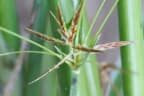
Cyperaceae FAMILY Least Concern
Cyperus articulatus
Cyperus articulatus
Edibility
2/5
Medicinal
4/5
Safety & Hazards
None known
Cultivation Details
HabitPerennial
Growth—
Cyperus articulatus grows naturally from the warm temperate zone through to the tropics. Probably requires a moist to wet soil. Plants are sometimes found growing in stagnant or slowly flowing water and also in sites with alternatively fresh and saline water[1]. The rhizome is aromatic[2]. In some areas the wild races of this species are said to be without aroma, but the aroma of cultivars is pungent and musk-like[2].
Propagation
Seed - Division. Cite as: Tropical Plants Database, Ken Fern. tropical.theferns.info. 2026-02-20. <tropical.theferns.info/viewtropical.php?id=Cyperus+articulatus>
Pollinators
Data unavailable
References
- [1]IUCN Red List of Threatened Species — http://www.iucnredlist.org/ ↩︎A list of plants under threat and facing possible extinction, usually with brief details of the threats and information on habitat.
- [2]The Useful Plants of West Tropical Africa. — Burkil. H. M. · Royal Botanic Gardens; Kew. · 1985 - 2004 ↩︎Brief descriptions and details of the uses of over 4,000 plants. A superb, if terse, resource, it is also available electronically on the Web - see http://www.aluka.org/
- [3]Flora of Guatemala — Standley P.C. & J. A. Steyermark · 1946 - 1976 · http://www.archive.org/ ↩︎A superb reference, though somewhat dated. Gives lots of plant uses as well as information on plant habit and habitat. The entire flora (13 volumes) can now be downloaded from http://www.archive.org/
- [4]Cyperaceae of Economic, Ethnobotanical and Horticultural Importance: A Checklist — Simpson D.A.; Inglis C.A. · The Royal Botanic Gardens; Kew, London · 2001 · ISBN 1-84246-038-2 ↩︎An excellent and very comprehensive checklist, giving the range, habitat and uses of over 500 species.
- [5]Raintree Nutrition - Tropical Plant Database — http://www.rain-tree.com/plants.htm ↩︎Detailed information on the medicinal uses of more than two hundred rainforest plants, mainly from S. America, with basic descriptions of the plants, their other uses etc.
- [6]Edible Native Plants of the Rocky Mountains. — Harrington. H. D. · University of New Mexico Press · 1967 · ISBN 0-8623-0343-9 ↩︎A superb book. Very readable, it gives the results of the authors experiments with native edible plants.
- [7]The Medicinal and Poisonous Sedges of India — Caius J.F. · 1936 ↩︎
- [8]Dictionary of Economic Plants. — Uphof. J. C. Th. · Weinheim · 1959 · ISBN - ↩︎An excellent and very comprehensive guide but it only gives very short descriptions of the uses without any details of how to utilize the plants. Not for the casual reader.
- [9]Swaziland's Flora - siSwati Names and Uses — Chris Long · 2005 · http://www.sntc.org.sz/flora/chrislong.asp ↩︎A basic, but very long, list of names and uses.
- [10]CosIng — http://ec.europa.eu/growth/tools-databases/cosing/ ↩︎CosIng is the European Commission database for information on cosmetic substances and ingredients.