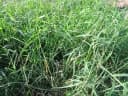
Cynodon nlemfuensis
Cynodon nlemfuensis
Safety & Hazards
None known
Cultivation Details
The plant is found naturally in tropical areas at latitudes from about 15°N to 15°S, and from sea level to elevations of more than 2,300 metres, representing a range in average annual temperature from about 20 - 27°c. It grows in areas with a mean annual rainfall between about 600 - 3,000mm (commonly 800 - 1,200mm)[1]. Grows best in full sun or light shade[1]. Succeeds on a wide range of soil types from sands to heavy clays, although it grows best in moist, well-drained, lighter textured soils[415. It is adapted to soils with a pH between about 4.5 - 8, but ideally between about 5.5 - 7[1]. When placed in a moist, firm seedbed, nodes sprout in 5 - 10 days, and a solid stand can be achieved in 3 months after planting under good conditions[1]. Some types produce reasonable amounts of seed and have vigorous seedlings, so there is considerable potential for spread by seed. However, most produce little or no seed and can only spread vegetatively[1]. All types have fibrous, resilient stolons that survive ploughing, stands actually being improved by cultivation. These grasses can therefore become weeds in cropping systems, although they are not as serious as Cynodon dactylon[1].
Propagation
Seed - Due to minimal seed set, these grasses are mostly propagated vegetatively, using either sprigs (above-ground stems) or stolons (runners). Freshly harvested planting material is broadcast on clean cultivated soil and covered by discing 5-10 cm deep and heavily rolled. With manual planting, stems are inserted into the soil to 75% of their length before compacting. Sprigs and newly established plants are susceptible to drought and should be kept moist[1]. Cite as: Tropical Plants Database, Ken Fern. tropical.theferns.info. 2026-02-20. <tropical.theferns.info/viewtropical.php?id=Cynodon+nlemfuensis>
Pollinators
Wind
References
- [1]Tropical Forages — http://www.tropicalforages.info/key/Forages/Media/Html/index.htm ↩︎Mainly focussed on forage plants, the site gives a lot of information on the plant, with a good botanical description, details of cultivation, plant uses and a good selection of photographs.