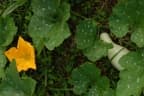
Cucurbita argyrosperma
Cucurbita argyrosperma
Safety & Hazards
The sprouting seed produces a toxic substance in its embryo[1].
Cultivation Details
Cucurbita argyrosperma can be grown successfully from the temperate to the tropical zone. Plants are tolerant of high temperatures but sensitive to cool conditions, they favour moderate rainfall but the roots are sensitive to water-logging[2]. The plant is not frost tolerant. Requires a rich, well-drained moisture retentive soil and a very warm, sunny and sheltered position[3]. Prefers a pH in the range 5.5 - 6.8[4]. There are some named varieties[5] and these are day-length neutral[2]. Over time, various more or less distinct groups of cultivars have been developed and these have been classified by botanists as detailed below. Since they all have similar requirements, and it can be rather difficult to classify some varieties, we have dealt with them all here and not given them separate entries. Cucurbita argyrosperma. The Cushaw pumpkin, as dealt with in this entry. It is subdivided into:- Cucurbita argyrosperma argyrosperma. The silver-seed gourd. Cultivated mainly for its edible seeds which are larger than in other forms with an attractive silvery edge. Cucurbita argyrosperma callicarpa. Japanese pie pumpkin or green-stripe cushaw. Cucurbita argyrosperma stenosperma. Cultivated in Mexico, we do not know of a common name. This species does not hybridize naturally with other members of this genus, though crosses have been made under controlled conditions[6, 7]. Squashes and pumpkins can be differentiated from each other by their fruit stalk, it is angular and polygonal in pumpkins but thick, soft and round in squashes[8]. This species is included in Cucurbita moschata by some botanists[6].
Propagation
Seed - sow early to mid spring in a greenhouse in a rich soil. Germination should take place within 2 weeks. Sow 2 or 3 seeds per pot and thin out to the best plant. Grow them on fast and plant out after the last expected frosts, giving them cloche or frame protection for at least their first few weeks if you are trying them outdoors. Cite as: Temperate Plants Database, Ken Fern. temperate.theferns.info. 2026-02-21. <temperate.theferns.info/plant/Cucurbita+argyrosperma>
Pollinators
Insects
References
- [1]A Colour Atlas of Poisonous Plants. — Frohne. D. and Pfänder. J. · Wolfe · 1984 · ISBN 0723408394 ↩︎Brilliant. Goes into technical details but in a very readable way. The best work on the subject that I've come across so far.
- [2]The New RHS Dictionary of Gardening. 1992. — Huxley. A. · MacMillan Press · 1992 · ISBN 0-333-47494-5 ↩︎Excellent and very comprehensive, though it contains a number of silly mistakes. Readable yet also very detailed.
- [3]RHS Dictionary of Plants plus Supplement. 1956 — F. Chittendon. · Oxford University Press · 1951 · ISBN - ↩︎Comprehensive listing of species and how to grow them. Somewhat outdated, it has been replaced in 1992 by a new dictionary (see [ 200 ]).
- [4]Vegetables in the Tropics — Tindall. H. D. · MacMillan, Oxford. · 1983 · ISBN 0-333-24268-8 ↩︎An excellent, in-depth look at the main vegetable crops that can be grown in the Tropics, plus many less well-known plants.
- [5]Cornucopia - A Source Book of Edible Plants. — Facciola. S. · Kampong Publications · 1990 · ISBN 0-9628087-0-9 ↩︎Excellent. Contains a very wide range of conventional and unconventional food plants (including tropical) and where they can be obtained (mainly N. American nurseries but also research institutes and a lot of other nurseries from around the world.
- [6]Gourds. — Organ. J. · Faber · 1963 · ISBN - ↩︎Deals with squashes and their relatives. Interesting and readable, it gives cultivation techniques and some details of plant uses.
- [7]The Plantsman. Vol.8. 1986 - 1987. — ? · Royal Horticultural Society · 1986 · ISBN - ↩︎Excerpts from the periodical giving cultivation details and other notes on some of the useful plants including some Cucurbitaceae.
- [8]Fruits of the Earth. — Bianchini. F., Corbetta. F. and Pistoia. M. ↩︎Lovely pictures, a very readable book.
- [9]Plants for Human Consumption. — Kunkel. G. · Koeltz Scientific Books · 1984 · ISBN 3874292169 ↩︎An excellent book for the dedicated. A comprehensive listing of Latin names with a brief list of edible parts.
- [10]Encyclopaedia of Medicinal Plants. — Chiej. R. · MacDonald · 1984 · ISBN 0-356-10541-5 ↩︎Covers plants growing in Europe. Also gives other interesting information on the plants. Good photographs.
- [11]The Garden. Volume 112. — RHS. · Royal Horticultural Society · 1987 · ISBN - ↩︎Snippets of information from the magazine of the RHS. In particular, there are articles on plants that are resistant to honey fungus, oriental vegetables, Cimicifuga spp, Passiflora species and Cucurbits.
- [12]Encyclopaedia of Herbs and their Uses. — Bown. D. · Dorling Kindersley, London. · 1995 · ISBN 0-7513-020-31 ↩︎A very well presented and informative book on herbs from around the globe. Plenty in it for both the casual reader and the serious student. Just one main quibble is the silly way of having two separate entries for each plant.
- [PFAF]Plants for a Future — pfaf.org ↩︎