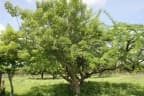
Capparaceae FAMILY
Crateva tapia
Crateva tapia
Edibility
2/5
Medicinal
2/5
Safety & Hazards
The roots are acrid, and it is stated that the juice, when in contact with the skin, produces blisters[1].
Cultivation Details
HabitEvergreen Tree
Growth—
A tree of lowland tropical areas. Grows best in a sunny position[2]. Often found on heavy clay soils in the wild, the plant can also tolerate some salinity[2].
Propagation
Seed - best sown as soon as it is ripe in a sunny position in a nursery seedbed[2]. Germination rates are usually below 50%, with the seed sprouting within 2 - 3 weeks[2]. Cite as: Tropical Plants Database, Ken Fern. tropical.theferns.info. 2026-02-20. <tropical.theferns.info/viewtropical.php?id=Crateva+tapia>
Pollinators
Bees
References
- [1]Flora of Guatemala — Standley P.C. & J. A. Steyermark · 1946 - 1976 · http://www.archive.org/ ↩︎A superb reference, though somewhat dated. Gives lots of plant uses as well as information on plant habit and habitat. The entire flora (13 volumes) can now be downloaded from http://www.archive.org/
- [2]Brazilian Trees. Volume 2. 4th Edition. — Lorenzi. H. · Instituto Plantarum De Estudos Da Flora; Brazil. · 2002 · ISBN 85-86714-15-1 ↩︎Information on 350 species of Brazilian trees. Stunning photographs of each species, brief details on the plant, its uses and how to grow it from seed. A superb work, with the minor irritation that the translation from Portuguese is not of the best.
- [3]Flora of Barro Colorado Island — Croat. Thomas B. · Stanford University Press · 1978 · http://biogeodb.stri.si.edu/bioinformatics/croat/home · ISBN 0-8047-0950-5 ↩︎A very good flora of an area in Panama. Written some years ago, so some of the names have been changed. The book is out of print, but the whole flora is now available on the web.
- [4]Brazilian Fruits and Cultivated Exotics — Lorenzi. H.; Bacher. L.; Lacerda. M.; Sartori. S. · Instituto Plantarum De Estudos Da Flora LTDA; Brazil. · 2000 · ISBN 85-867174-24-0 ↩︎A superb book, giving information on several hundred fruit species. Each entry has a brief description of the plant and its uses, accompanied by one to many excellent quality photographs of the fruits.
- [5]Tree Species of Panama — http://ctfs.arnarb.harvard.edu/webatlas/mainframe.php?order=s ↩︎Factsheets on all the tree and shrub species of Panama, giving identification guide, brief guide to the species and some uses. A vast, but rather incomplete work as of 15/07/09.
- [6]Medicinal Plants of Brazil — Mors W.B.; Rizzini C.T.; Pereira N.A. · Reference Publications; Michigan. · 2000 · ISBN 0-917256-42-5 ↩︎An extremely concise book, listing approximately 1,500 species and varieties of plants with their botanical name, common name in Brazil, regions in Brazil where the plant is found, a brief list of uses and any medically active compounds in the plant.
- [7]A Century of Trees of Panama. — Pittier H. Mell C.D. · http://www.biodiversitylibrary.org ↩︎A work that was very difficult to get published according to the correspondence contained at the start!. A treatment of 100 different species with descriptions and details of uses. It can be downloaded from the Internet.