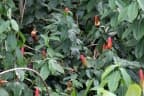
Costaceae FAMILY
Costus spicatus
Costus spicatus
Edibility
0/5
Medicinal
2/5
Safety & Hazards
None known
Cultivation Details
HabitPerennial
Growth—
Prefers a very fertile, acid soil and a position in some shade[1].
Propagation
Seed - best sown fresh[1]. Germinates best at a temperature of 20c[1]. Division[1]. The rhizomes are cut into pieces 2.5 cm long and planted in a mixture of sand and peat moss[2]. Cuttings of stem sections[1]. The stems are cut into pieces 2.5 cm long and planted in a mixture of sand and peat moss[2]. Bulbils sometimes develop in the enlarged fruit head of some species. These can be potted up and will grow into new plants[1]. Cite as: Tropical Plants Database, Ken Fern. tropical.theferns.info. 2026-02-20. <tropical.theferns.info/viewtropical.php?id=Costus+spicatus>
Pollinators
Insects
References
- [1]The New RHS Dictionary of Gardening. 1992. — Huxley. A. · MacMillan Press · 1992 · ISBN 0-333-47494-5 ↩︎Excellent and very comprehensive, though it contains a number of silly mistakes. Readable yet also very detailed.
- [2]Protabase - Plant Resources of Tropical Africa. — http://www.prota.org ↩︎An excellent on-line database with detailed information on over 3,200 species of useful plants of Africa.
- [3]Dictionary of Economic Plants. — Uphof. J. C. Th. · Weinheim · 1959 · ISBN - ↩︎An excellent and very comprehensive guide but it only gives very short descriptions of the uses without any details of how to utilize the plants. Not for the casual reader.
- [4]Medicinal Plants of the Guianas — DeFilipps, R. A.; Maina, S. L.; & Crepin, J. · Smithsonian Museum · http://botany.si.edu/bdg/medicinal/index.html ↩︎A down-loadable PDF document of a book in pre-publication awaiting illustration. An excellent, if rather terse, guide to the traditional medicinal uses of the plants of the region