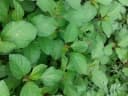
Corchorus trilocularis
Corchorus trilocularis
Safety & Hazards
None known
Cultivation Details
A plant of mainly tropical areas, it grows best when temperatures are around 25°c[1]. In Tanzania it grows in areas where the mean annual rainfall is in the range 1,000 - 1,800mm[2]. Prefers a sunny position. Succeeds in a range of soils from black cotton soil to semi-arid sandy soils[1]. Grows best in fertile soils[1]. The plant has spread widely as a result of human activity. It is commonly found as a weed in irrigated fields, and in soils with residual moisture, where it may colonize the entire area, becoming the most abundant species[1]. It has been recorded as invasive in New Caledonia[3]. A fast-growing plant with a short growing season, often no longer than 3 - 4 months[1]. Harvesting the shoot tips commences when plants are about 10 cm tall. These fresh shoots are most appreciated. Plucking of shoots continues until fruits start developing and from then on only new side shoots or individual young leaves are harvested[1].
Propagation
Seed - Cite as: Tropical Plants Database, Ken Fern. tropical.theferns.info. 2026-02-20. <tropical.theferns.info/viewtropical.php?id=Corchorus+trilocularis>
Pollinators
Insects
References
- [1]Protabase - Plant Resources of Tropical Africa. — http://www.prota.org ↩︎An excellent on-line database with detailed information on over 3,200 species of useful plants of Africa.
- [2]Edible Wild Plants of Tanzania — Ruffo, C.K.: Birnie, A. & Tengnas, B. · Regional Land Management Unit; Nairobi. · 2002 · ISBN 9966-896-60-0 ↩︎A very well presented, simple guide to growing and utilizing wild food plants in Tanzania, with line drawings of each plant, a description, habitat and range, non-food as well as food uses, plus basic information on growing the plants.
- [3]Pacific Island Ecosystems at Risk — http://www.hear.org/pier/scientificnames/index.html ↩︎A very good website detailing weed species that have been introduced into the Pacific Islands.
- [4]Mansfeld's Database of Agricultural and Horticultural Plants — http://mansfeld.ipk-gatersleben.de/pls/htmldb_pgrc/f?p=185:3:4292127278597336 ↩︎Terse details of a huge range of useful plants.
- [5]Flowers of India — http://www.flowersofindia.net/ ↩︎A wed site of native Indian plants, plus cultivated and naturalized species. It has good quality photos and terse details on more than 3,000 species and cultivars.
- [6]Useful Fiber Plants of the World — Dodge C.R. · USDA; Washington. · 1897 · http://www.biodiversitylibrary.org/ ↩︎A rather dated, but very comprehensive catalogue of fibre plants from around the world. The book can be downloaded from the Internet.
- [PFAF]Plants for a Future — pfaf.org ↩︎